Chongqing Hot Pot Guide: 6 Best Local Spots & How to Eat Like a Local
If there’s one dish that captures the soul of Chongqing, it’s chongqing hot pot. The sight of a boiling pot of fiery red oil, the smell of chilies and Sichuan pepper hanging in the air — it’s an invitation, a challenge, and an unforgettable experience all at once. Whether you spell it chongqing hotpot or chongqing hot pot, this bubbling feast is the heart of the city’s food culture. This guide will walk you through everything you need to know, from how the broth gets its kick to where the locals actually eat.
What Makes Chongqing Hot Pot So Spicy?
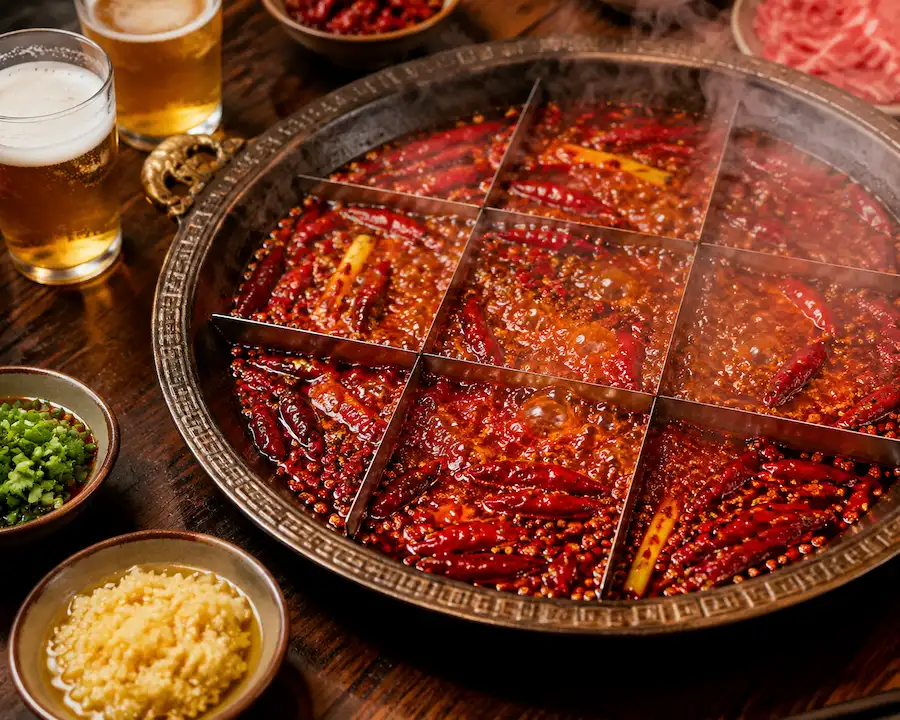
Walk past any hot pot restaurant in Chongqing around dinner time, and the first thing that hits you is the aroma. It’s not just heat — it’s a deep, layered fragrance of beef fat, fermented beans, and slow-cooked spices. At the center of this experience is the chongqing hot pot base — a rich, oily broth that fuels the entire meal.
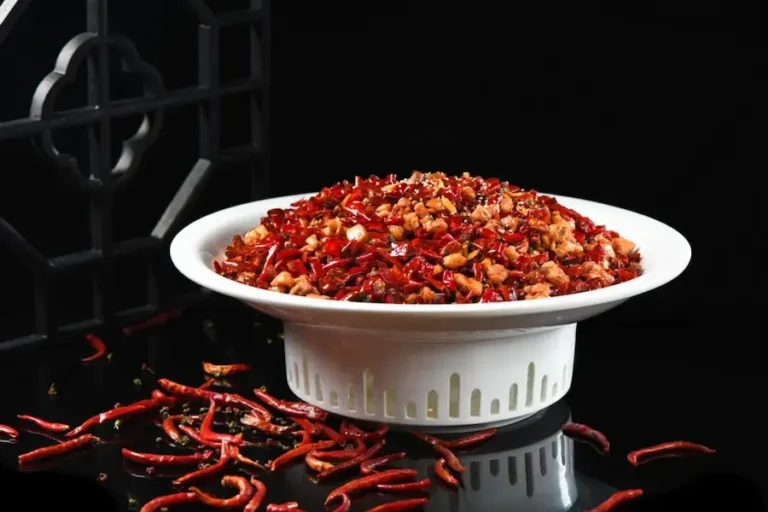
The base is built around beef tallow (niúyóu). Unlike other Chinese hot pots that use water or stock, Chongqing’s version uses rendered beef fat as the foundation. Into that goes Shizhu red chilies, Maowen Sichuan pepper, doubanjiang (fermented broad bean paste), and a dozen other aromatics. Everything is fried together for hours until the fat absorbs all the flavor. When it hits the table, the broth is dense, fiery, and deeply savory. This is what makes chongqing spicy hot pot so intense — and so addictive.
A recent documentary called Chongqing Hot Pot captures this world beautifully, following the city’s obsession with bubbling cauldrons and the people who dedicate their lives to perfecting the broth. Watching it, you start to understand why a good chongqing hot pot base is treated like a family heirloom. Many restaurants still hand-fry their base daily, and the best ones never reveal the full recipe.
If the all-red cauldron feels intimidating, order a yuanyang pot. It’s a split pot — one side blazing red, the other a milder mushroom or bone broth. Locals consider this the biggest concession they’ll make for visitors. And a friendly warning: when they say “mild” (wēilà), they mean it by Chongqing standards, which is still spicier than most food anywhere else. Start there, and work your way up.
Understanding Chongqing Hot Pot Broth & Dipping Sauces
The magic of the meal lies in how the broth evolves. As you cook ingredients in it, the beef tallow picks up more flavor from the meat, vegetables, and spices. The liquid doesn’t get watered down; it gets richer. That’s why a pot of chongqing hot pot can simmer for two hours and taste even better at the end.
Alongside the broth, the dipping sauce is non-negotiable. Forget sesame paste or satay sauce. In Chongqing, you mix your own small bowl of sesame oil with a generous spoonful of minced raw garlic. A splash of vinegar, a little oyster sauce, chopped scallions, and cilantro — that’s it. The sesame oil coats the food, cooling it down instantly while taming some of the chili heat. Locals will tell you it also helps protect your stomach from the barrage of spice.
If you visit a market after your meal, you’ll spot packets of chongqing hot pot seasoning for sale. These solid blocks of beef tallow and spices are exactly what many families use at home. They’re a popular souvenir — just toss one into boiling water, and you’ve recreated a restaurant-worthy broth in your own kitchen.
Best Hot Pot Restaurants in Chongqing (Local Favorites)
Finding the best hot pot in chongqing is less about polished dining rooms and more about character. Many of the most beloved spots are tucked into alleyways, old apartment blocks, or even wartime bomb shelters. What follows are six chongqing hot pot restaurant picks that locals genuinely love. If you’re still planning your Chongqing trip itinerary, save these addresses — they’re worth building a whole evening around.
1. Peijie Old Hot Pot (Jiaochangkou)
A legend for good reason. Peijie draws huge crowds nightly with its intensely beefy tallow broth and creative dishes. The gongcai meatballs and chongqing mala beef are standout orders. The dining room has a nostalgic Sichuan-style charm, and it’s an easy walk from Jiaochangkou metro station. Grab a ticket early — the queue moves, but it’s long.
Address: No.1 Sixian Alley, Minsheng Road, Yuzhong District
2. Deng Mangzi Old Hot Pot (Luzumiao)
Hidden beneath an old residential building near a flower market, Deng Mangzi is rough, loud, and deeply satisfying. The broth leans heavy on the chili, and the aromatics hit you immediately. Order the tender beef and ox liver. This is the kind of place where you feel the real pulse of the city.
Address: Near Luzumiao Flower Market, Yuzhong District
3. Dongting Hot Pot (Bomb Shelter Branch)
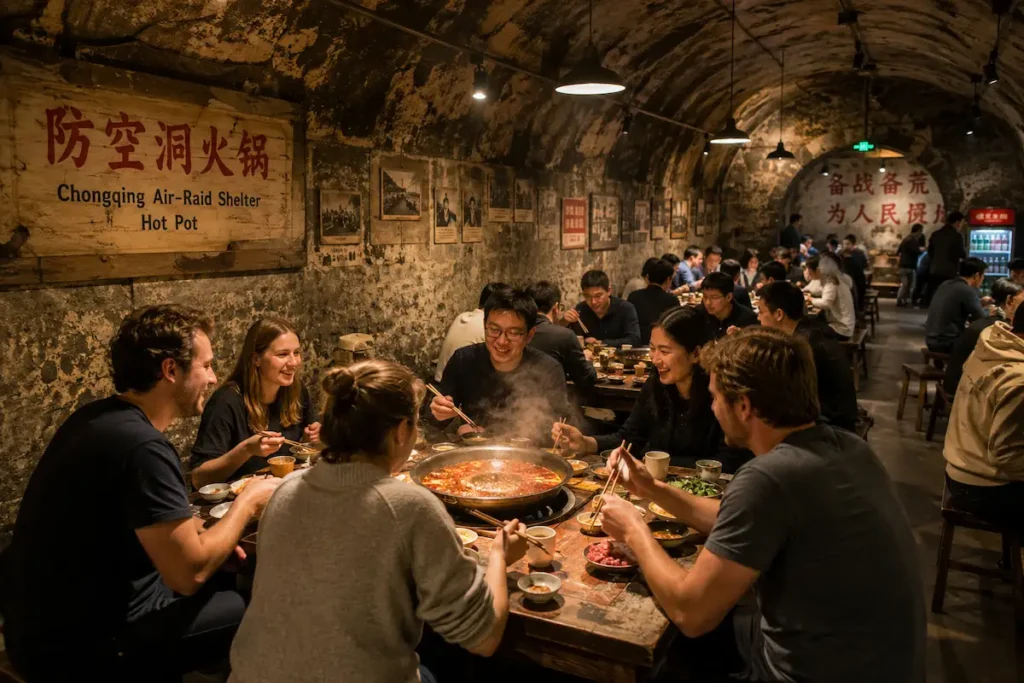
Eating in an air-raid shelter turns dinner into a story you’ll tell for years. These tunnels stay cool in summer and warm in winter, and the scent of beef fat fills every corner. Dongting is the most famous underground hotpot chongqing experience — a true bomb shelter hotpot chongqing meal that blends history with flavor. The food is solid, the prices fair, and the setting completely unique. When you’re done eating, there are many more attractions in Chongqing that carry the same layered history, from ancient towns to riverside landmarks.
Address: No.5-4 Renmin Road, Yuzhong District
4. Badatang Hot Pot (Nanshan Main Branch)
If you have time for a short trip uphill, Badatang sits on Nanshan Mountain, with tables set among trees. At night you can see the city lights below. It’s part of the “Land School” of hot pot, using well water to temper the broth’s sharpness. The water buffalo tripe and crispy pork are must-orders.
Address: Nanshan Street, Nan’an District
5. Yuwei Xiaoyu Hot Pot (Pipashan Main Branch)
This spot gained nationwide fame after appearing on the documentary A Bite of China, and the quality has held steady. The base uses Shizhu red chilies and Hanyuan Sichuan pepper, fried by hand. It’s fragrant and bold without being harsh. Don’t skip the rice paddy tripe and the kung fu ox liver.
Address: No.86 Pipashan Main Street, Lianglukou, Yuzhong District
6. Zhou Shixiong Large Blade Kidney Hot Pot
Known for its paper-thin kidney slices, this place also does excellent chongqing mala beef. The broth recipe has won awards, and the open kitchen makes hygiene a visible priority. It’s a perfect bridge between authentic taste and a more polished environment.
Address: Multiple branches — search the nearest one
How to Order Like a Local: Must-Try Ingredients
A typical chongqing hot pot menu looks like a list of body parts and mysterious textures, but that’s where the fun begins. Start with the essentials.
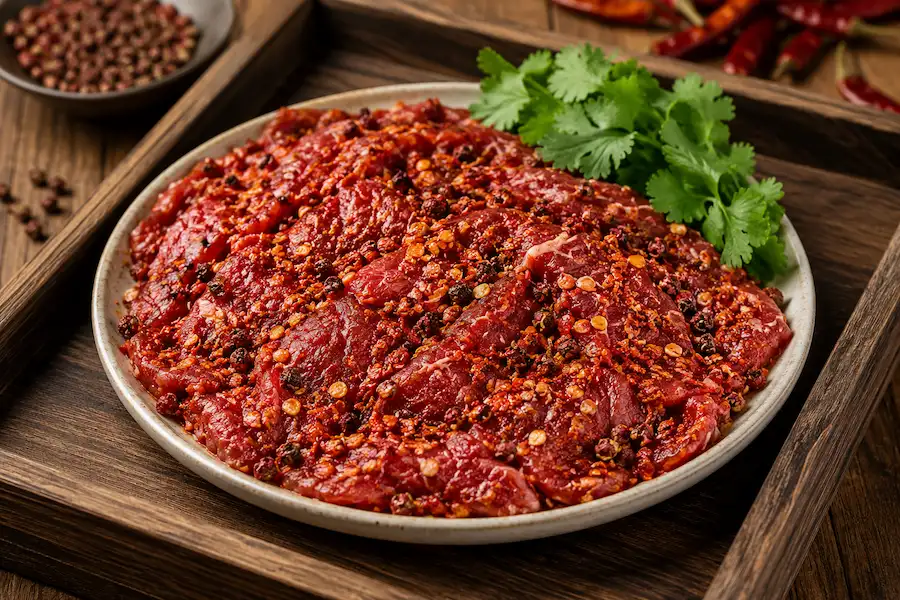
The first dish you should order is chongqing mala beef. Slices of raw beef are coated in a thick layer of dried chili flakes and ground Sichuan pepper. When you dip them into the boiling broth, the outer crust fuses with the beef tallow, and each bite delivers a soft, numbing, fiery punch. It’s the ultimate test of a restaurant’s quality. If you love this numbing kick, you’ll also want to try Chongqing spicy chicken, another iconic dish that shares the same chili-and-Sichuan-pepper soul.
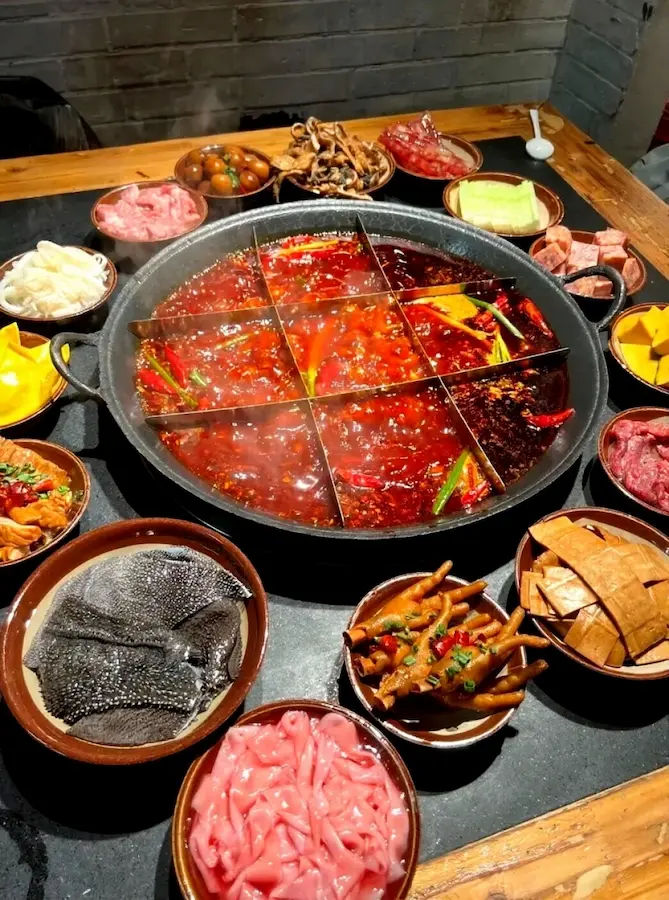
Other classics on any chongqing hotpot menu include fresh tripe (máodǔ), goose intestine, thick-cut pork slices, and small fish called hào’ér yú. For crunch, add gongcai (a type of vegetable stem) and square bamboo shoots. Adventurous eaters can look for duck blood curd, pork brain, or freshly sliced swamp eel.
Many old-school spots use a nine-grid pot. The center section boils the most furiously — perfect for quickly swishing tripe and goose intestine. The outer grids are milder, ideal for ingredients that need more time, like brain or fatty pork.
When you cook tripe or goose intestine, use the “seven up, eight down” method. Grab the item with chopsticks, dip it into the boil, lift it out, and repeat seven or eight times until the edges curl slightly. Eat it immediately. Chongqing mala beef needs only a brief dip until it changes color; any longer and it toughens. Meanwhile, luncheon meat and pork slices can simmer away, soaking up flavor.
With your dipping sauce ready and a plate of tripe in hand, the rhythm of the meal takes over. It’s fast, hot, and wonderfully satisfying.
Can You Make Chongqing Hot Pot at Home?
If you leave Chongqing craving more, the good news is that a reliable chongqing hot pot recipe is surprisingly simple — if you cheat a little. Most supermarkets in the city and many online stores sell solid blocks of chongqing hot pot base. These packaged bases contain beef tallow, chilies, Sichuan pepper, and spices, compressed into a brick. You melt one block into boiling water, and within minutes your kitchen smells like a Chongqing alleyway. Add your own sliced meats, vegetables, and tripe, and you’ve got a home version that’s remarkably close to the real thing.
For anyone searching for a chongqing hotpot recipe from scratch, be warned: hand-frying the base takes hours and a well-ventilated kitchen. The easier route is to buy a quality seasoning pack, then focus on sourcing the freshest ingredients. Many hot pot restaurants sell their own branded packs, so you can bring a taste of your trip back home.
Hot Pot Etiquette & Final Tips
A few things will make your meal smoother. For relief from the heat, order a bottle of chilled Weiyi soy milk, or a bowl of bingfen — a jelly dessert with brown sugar and crushed ice. These cool your mouth far better than water ever could.
When it comes to cost, a solid chongqing hot pot meal usually runs between 80 and 120 RMB per person (roughly 11 to 17 USD). In neighborhood joints, you can easily eat well for around 60 RMB (about 8.5 USD). The value is outstanding for the quality and experience.
A practical tip for spotting authentic spots: look at the ground outside the entrance. If you see years of dark oil stains baked into the concrete, you’ve found a place that’s been feeding locals for a long time. And a crucial warning — if a taxi driver or rickshaw rider near Jiefangbei or Hongya Cave Chongqing strongly insists on taking you to a “secret local place,” politely refuse. These are often overpriced tourist traps where a plate of tripe can cost several times the normal price. Real chongqing hot pot joints never need touts.
Come during dinner hours for the liveliest atmosphere, and don’t shy away from summer. Sitting outside, sweating through your shirt while dipping tripe into bubbling red oil — that’s as Chongqing as it gets.
The first time you lift a slice of beef coated in chili, swirl it through garlicky sesame oil, and taste that wave of heat and numbness, the city reveals itself. In every simmering pot, in every loud and crowded room, Chongqing puts its wild, generous heart right on the table. Now all you have to do is pick up your chopsticks and join in.
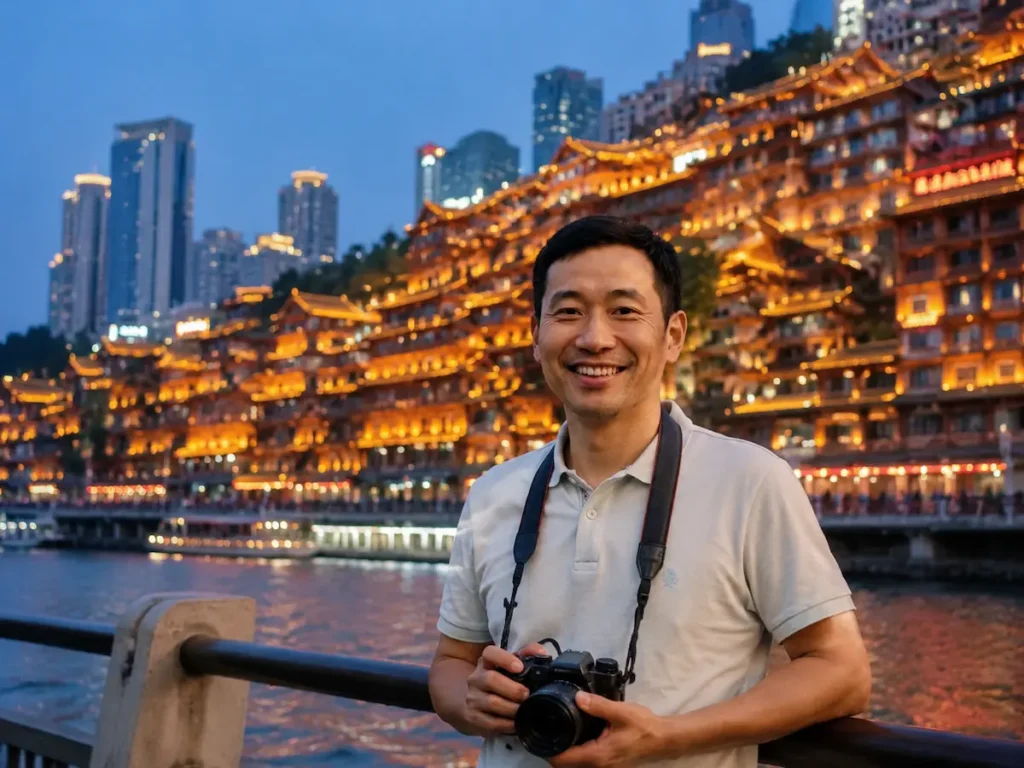
Ke Ping — Founder, Chongqing Travels
Certified China Travel Specialist · Certificate details
This guide can become your real trip
Instead of figuring out the mountain city's vertical maze alone, let me and our team build your perfect Chongqing trip — from Hongyadong's neon lights to the best late-night hot pot.
📋 Plan My Chongqing Trip