Chongqing in Winter: Is It Worth Visiting? (2026 Travel Guide)
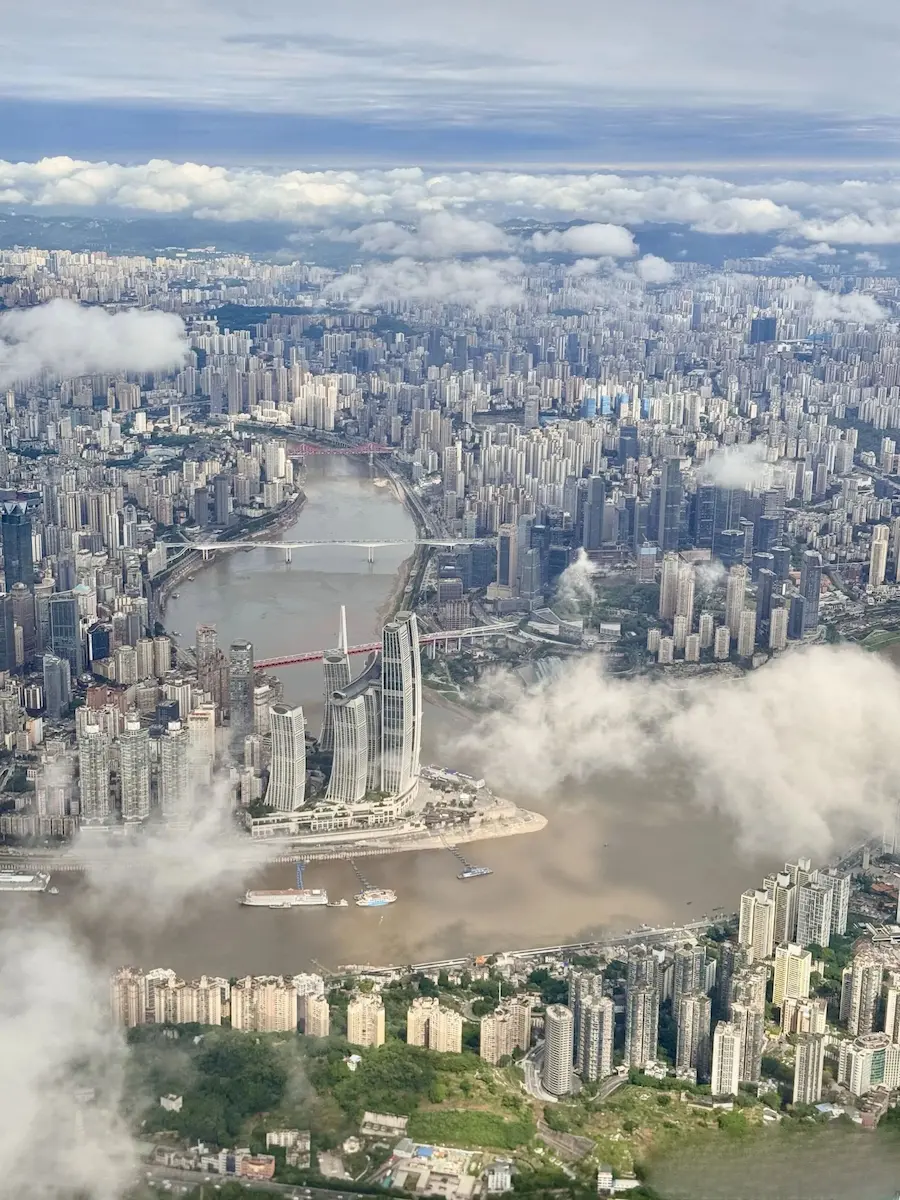
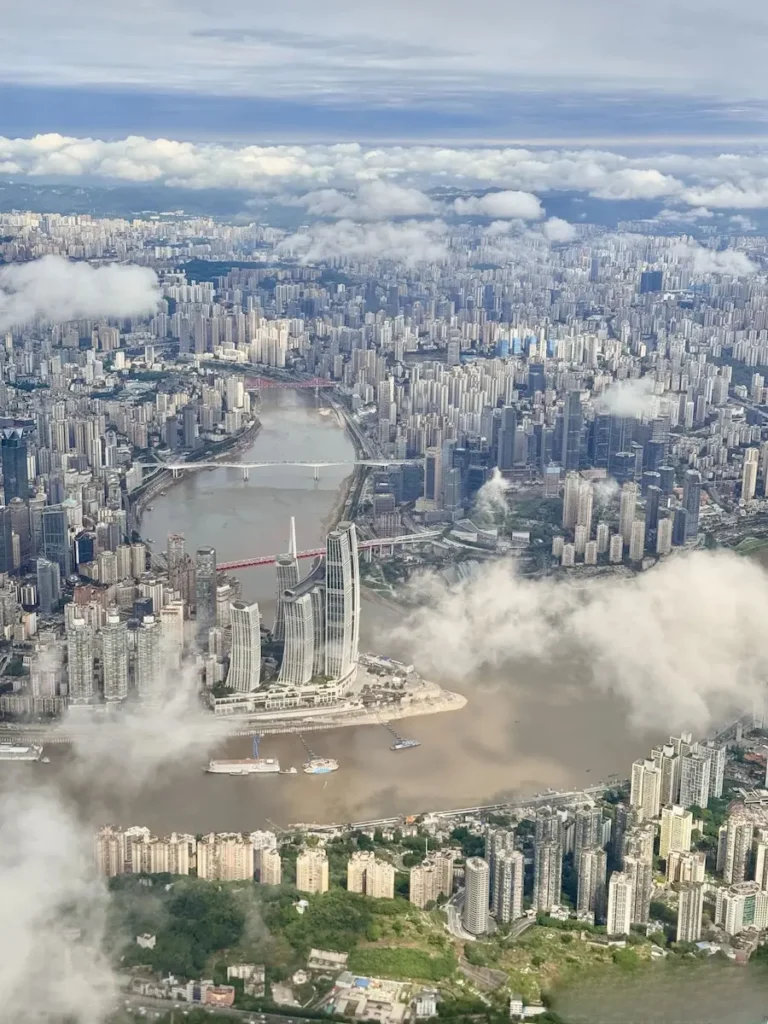
I’ve been to Chongqing in winter a handful of times, and every trip opens the same way. You pull back the curtain in the morning and there’s no sky out there — only fog. The towers across the Yangtze look like they’ve been dipped in milk, only their top halves floating, their glass windows glowing a soft amber through the mist. The red arch of Dongshuimen Bridge climbs out of the fog with half its span missing, as if it were suspended over clouds. The air is so damp you could wring it out, and the cold creeps along your bones instead of slapping your face.
Southerners have a word for this: “wet cold.” The thermometer might say 8°C, but pull on a down jacket, walk ten minutes, and your trouser cuffs are damp and the back of your neck is chilled. Yet this is the same wet, foggy, snowless city I keep wanting to return to.
Chongqing in winter is the season foreign travelers misread most. It isn’t a northern snowscape, and it isn’t a tropical escape. It’s the “Fog City” — a place that turns its cold months into hotpot, hot springs, and a skyline of warm lights. If you’re on the fence about coming, this guide covers it all: how cold it really gets, how thick the fog is, whether it snows, what to wear, and what to do.
The short answer: yes, Chongqing in winter is worth it — as long as you’re not coming to see snow in the city. From December through February, daytime highs in the urban area sit around 8–12°C, dropping to 3–6°C at night. It’s damp and cold but not freezing, foggy, nearly snow-free, with the occasional light haze. But the hotpot is at its best, the hot springs feel incredible, and the crowds are gone. Want snow? A two-hour train ride to Wulong Fairy Mountain or Jinfo Mountain will sort you out.
Chongqing Winter Weather: What It Actually Feels Like
Chongqing Winter Temperature — Mild on Paper, Colder in Reality
The headline chongqing winter temperature doesn’t look scary. Between December and February, daytime highs in the city centre hover at 8–12°C, with nights falling to 3–6°C, and the coldest snaps dipping toward 2°C. On paper, that’s far gentler than Beijing or Xi’an. But Chongqing’s cold is the damp, bone-deep kind — relative humidity sits above 80% all season, so 8°C here can feel worse than a dry -5°C up north.
The local saying “same temperature inside and out” is real. Northern China has central heating; Chongqing doesn’t. Ordinary homes and some guesthouses get genuinely chilly in winter. The good news: most hotels run reversible air conditioners, so just confirm the heating works when you book.
Chongqing Fog — The Fog City Lives Up to Its Name
Chongqing’s nickname is the “Fog City” (雾都), and winter is when it earns it. The city sees chongqing fog on more than 60 days a year, most of them clustered in the cold months. On a winter morning, the whole city sits in thick mist — the river and the skyline reduced to ink-wash outlines until noon slowly burns it off. First-time visitors find it eerie. You stand by the Yangtze and the Raffles City tower across the water looks like a mirage, impossible to tell where water ends and sky begins.
This is exactly where Chongqing’s “cyberpunk” look comes from, and it photographs beautifully on grey days.
Does It Snow in Chongqing? — Not in the City
This is the biggest misunderstanding. Snow in the urban area of Chongqing is almost unheard of. Since the Shapingba weather station started keeping records in 1951, the city centre has seen real snowfall in only a little over 20 winters — and there was a full 20-year gap from 1997 to 2016 with none at all. The last proper city snowfall, in January 2023, was enough to trend on Chinese social media.
So if you’re chasing snow in the city, you’ll be disappointed. But the high mountains around Chongqing — Wulong Fairy Mountain and Jinfo Mountain — hold reliable snow and ski slopes from December through February, and they’re a short train ride away. The pattern holds all season: Chongqing in December is mild and foggy, Chongqing in January is the coldest stretch, and Chongqing in February starts to hint at spring.
Air Quality — Occasional Haze, Nothing Severe
Chongqing sits in a basin, so winter air doesn’t move much, and you’ll get the odd hazy day (AQI mostly between 50 and 110, “good” to “moderate”). A cold front or a light rain clears it fast. For most visitors it’s a non-issue — just pack a mask if you’re sensitive.
What to Do in Chongqing in Winter
Chongqing winter comes down to four things: hotpot, hot springs, crowd-free sights, and a mountain snow day.
Eat Hotpot — Winter Is Peak Season
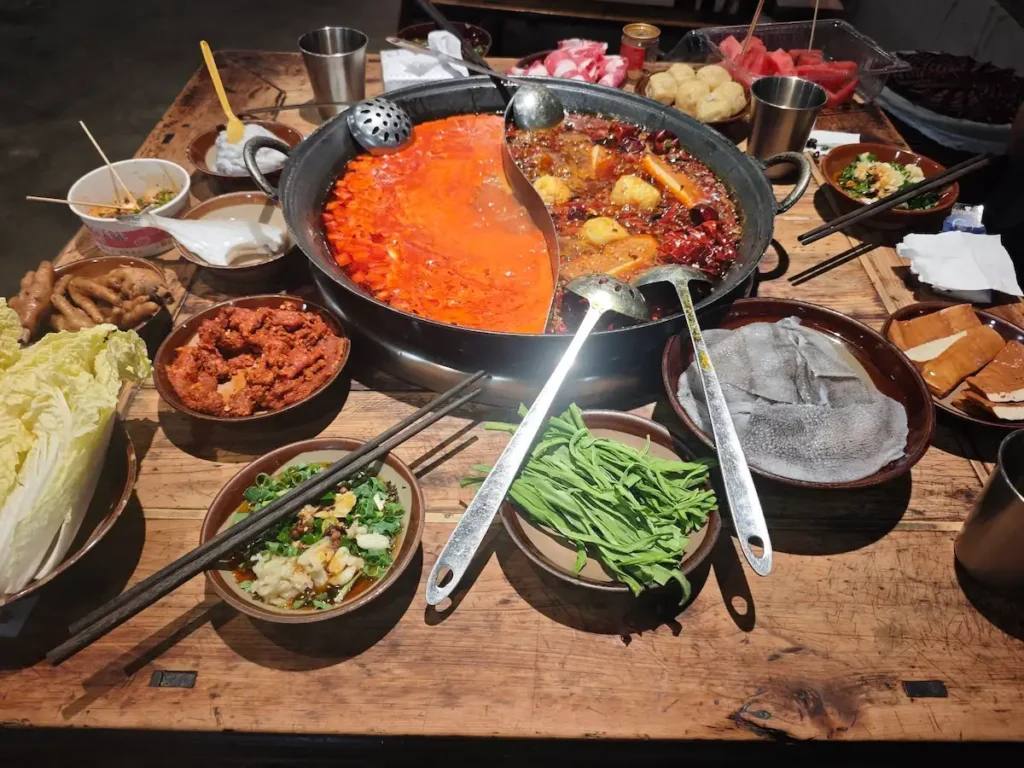
Winter is when Chongqing hot pot is at its best. Red broth rolling, beef tallow fragrant, tripe dipped seven up, eight down in the oil bowl — one mouthful and you’re warm to the bone. Locals spend winter evenings gathered around hotpot, almost by default.
For the full heavy-oil, heavy-spice experience, head to Pei Jie (珮姐老火锅), a classic old-school spot. First time and worried about the heat? Zhoushixiong (周师兄) is more forgiving and will dial down the spice for tourists. Order a plate of crispy fried pork and a bowl of ice jelly on the side to cut the burn — and check our Chongqing food guide for more.
Soak in Chongqing Hot Springs — the “World Hot Spring Capital”
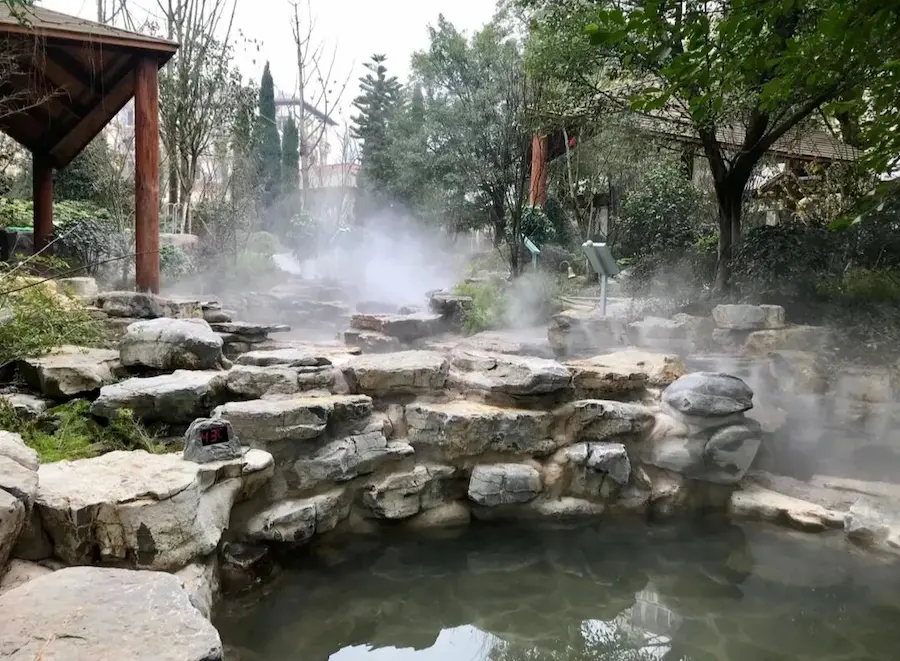
Few visitors realise Chongqing is one of China’s great hot spring cities. Official figures put its proven reserves at 560 million tonnes, with a daily extractable volume of 1.21 million tonnes across more than 160 spring sites — several of them right inside the city. That’s why locals say a winter without a hot spring is an incomplete winter.
The most convenient chongqing hot springs option is Ronghui Hot Spring in Shapingba District — well-equipped, reachable by Line 1 metro to Shapingba Station plus a ten-minute taxi. For something quieter and more upmarket, head to Beiquan (North) Hot Spring or Banyan Tree Spa at the foot of Jinyun Mountain, where you soak with mountain views. Entry runs from a little over ¥100 to several hundred yuan (roughly USD 15 to 100+).
See the Sights Without the Crowds
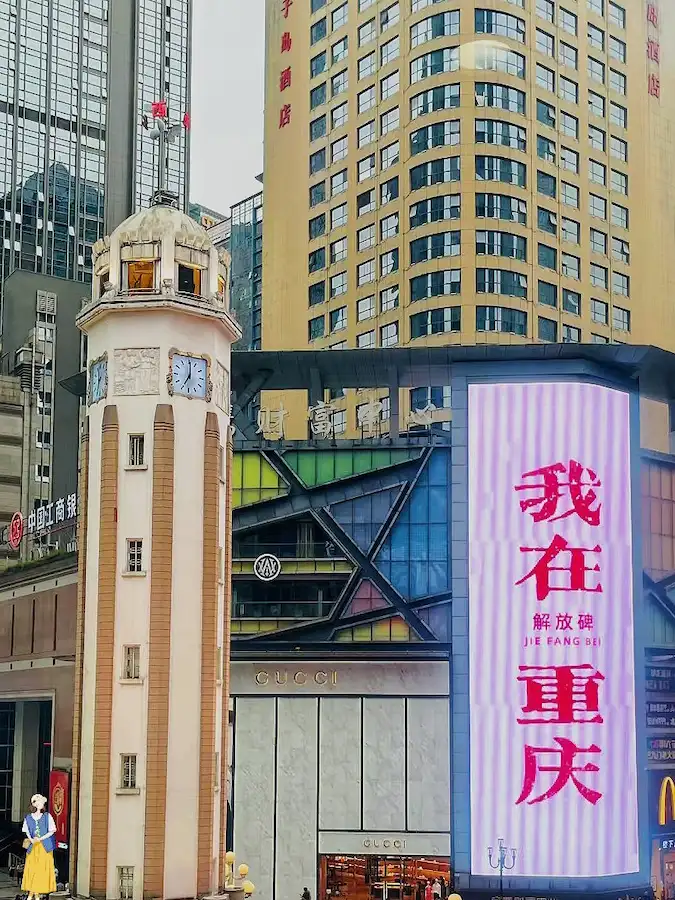
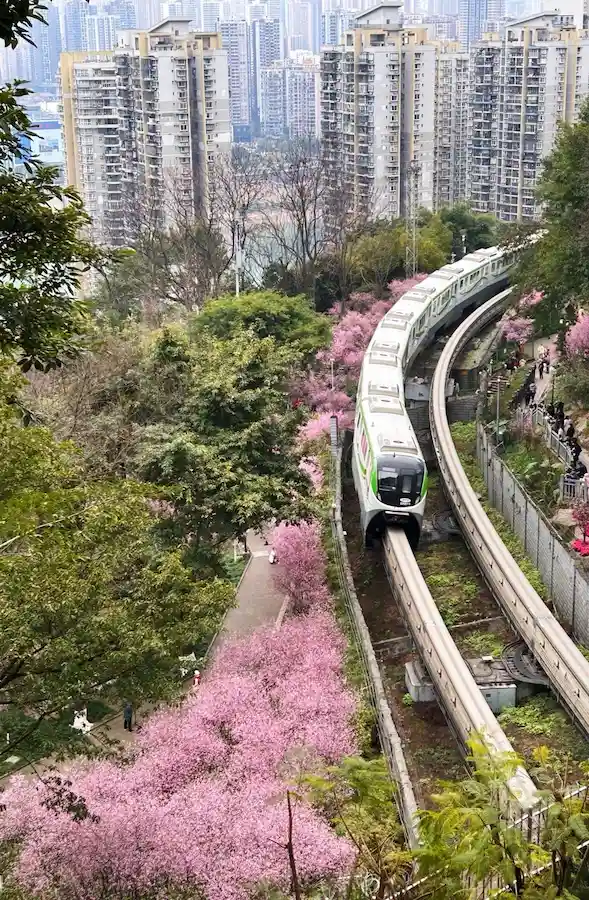
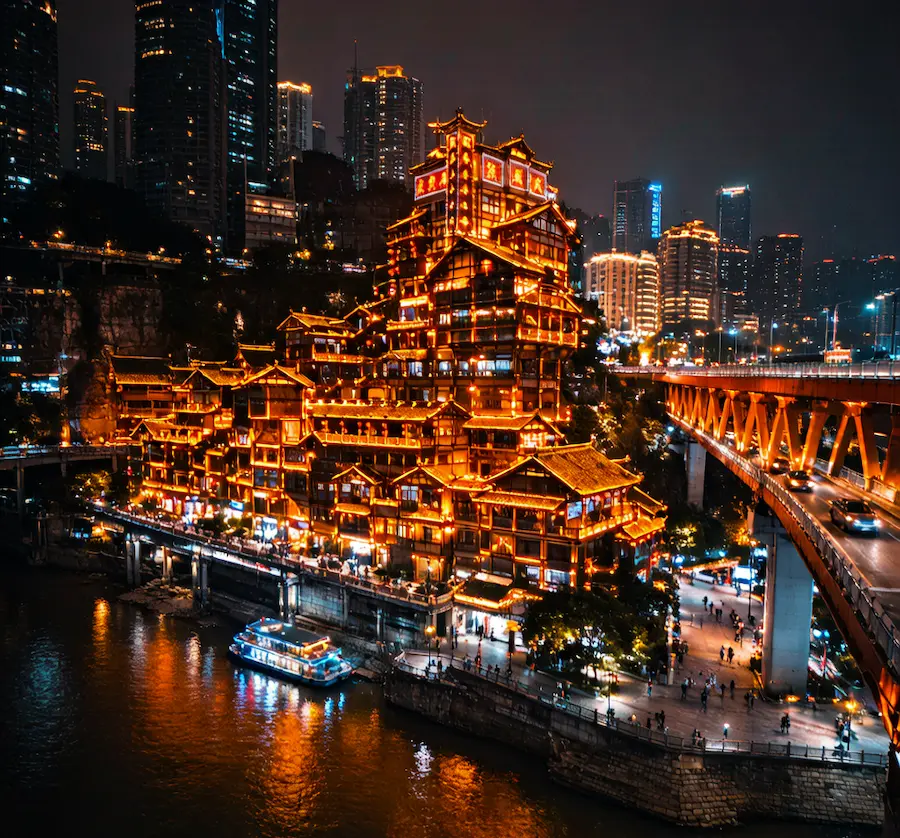
Hongya Cave, Jiefangbei, and the Liziba monorail-through-a-building all lose their summer crowds come winter. No fighting for a photo spot. When Hongya Cave lights up at night, its stilt houses stack down the cliff in the reflection of the Jialing River — pure Spirited Away — and the cold river wind only adds to the mood. Old streets like Shibati and the mountain walkways are best walked slowly in winter, when you can actually see the bones of this 8D maze of a city. For the full list, see our things to do in Chongqing guide.
Chase Snow in the Mountains
For real snow and skiing, two spots outside the city are the reliable picks:
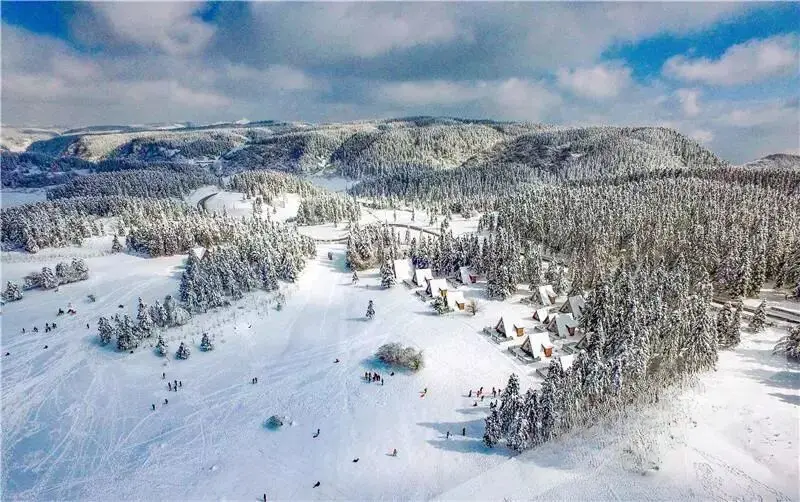
- Wulong Fairy Mountain (武隆仙女山): a national forest park that turns into a broad alpine snowfield in winter — locals call it the “southern snow plain.” It has a ski area and snow activities, plus a scenic train that glides through the snow forest. From Chongqing, it’s about a two-hour train ride to Wulong (a regular train, not high-speed — don’t search the wrong type in your booking app), then about an hour’s shuttle.
- Nanchuan Jinfo Mountain (南川金佛山): a 5A scenic area famous for winter rime ice and frozen waterfalls, with a high-altitude ski slope on its north face. Down at the foot of the mountain, Tianxing Town has a hot spring (tickets from ¥68, about USD 10), so you can do the whole “fire and ice” day — ski in the morning, soak in the afternoon. The resort bundles “stay + ski + hot spring” packages; a two-person self-drive deal runs around ¥468 (USD 67).
That’s where you’ll find chongqing snow — not in the city, but up in the mountains.
What to Wear in Chongqing in Winter
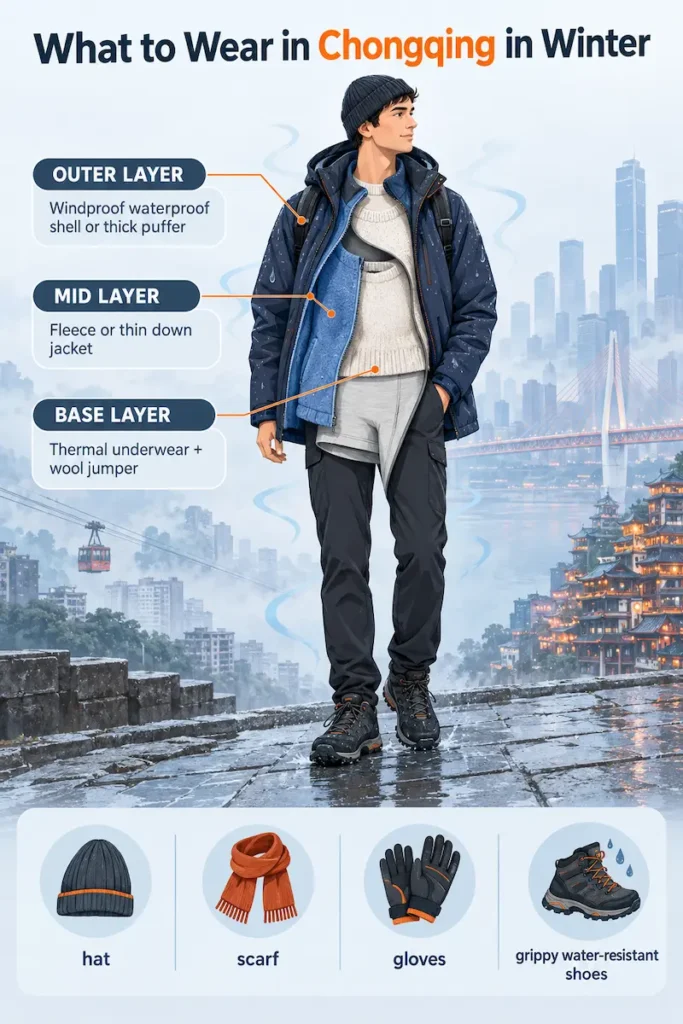
Chongqing in winter is damp and unheated indoors, so layering and water resistance are everything:
- Base layer: thermal underwear, a wool jumper
- Mid layer: fleece or a thin down jacket
- Outer layer: a windproof, waterproof shell or a thick puffer (winter brings light drizzle)
- Extras: hat, scarf, gloves — and grippy, water-resistant shoes (rain makes the stone paths slippery)
One line to remember: don’t trust the thermometer. The wet cold will make you want the thermals, the jumper, and the puffer — all at once.
Is Chongqing in Winter Worth It?
If you’re torn between winter and another season, here’s the honest math:
- Summer: brutal. It’s one of China’s “four furnace cities,” regularly above 35°C, and packed. Winter’s 8–12°C is a relief.
- Spring and autumn: the best weather, but also peak season — crowds and pricier hotels. Winter is the off-season, fewer people and lower prices (but steer clear of Chinese New Year and the New Year holiday, when Hongya Cave and Jiefangbei get as packed and pricey as summer).
- Winter’s only real cost: fog and grey skies, dim light for photos, and no snow in the city itself.
The verdict: if you want to save money, dodge crowds, eat hotpot, soak in hot springs, and squeeze in a mountain snow day, winter is Chongqing’s best-value season. If you want blue skies and to wander without freezing, spring or autumn is safer — our best time to visit Chongqing guide breaks it down by season.
Can’t decide between the city and the mountains? Don’t choose. Spend two to three days eating, soaking, and wandering the city, then add one day on the train to Fairy Mountain or Jinfo Mountain — a clean three-to-four-day trip.
A Winter Day in Chongqing, From Foggy Morning to Hotpot Night
Let me walk you through a winter day in Chongqing, so you know exactly what it feels like.
The morning starts with cold — not a shiver so much as a slow ache, the room colder than the duvet, your whole body curled up refusing to move. You pull back the curtain and it’s white outside, the fog still hanging, the far bank reduced to shadows.
First thing, a bowl of xiaomian noodles. The hot broth brings you back to life. The shop owner asks “two liang or three?” Add a fried egg, the chilli oil ladled red and glossy, and by the time you’re done your forehead is sweating and the fog-cold is gone.
Midday, a hot spring. The moment you step into the pool, the tension drains out of you. Soak until your face is flushed, then stand in the cold air for a minute — hot and cold trading places, an odd, wonderful feeling.
The afternoon is for wandering Jiefangbei and Shibati. The old streets are quiet in winter — stilt houses, flagstone lanes, vendors with shoulder poles — and at a slow pace you can finally see the skeleton of this city.
Night is the main event: hotpot. The tallow broth rolls, tripe, duck intestine, and aorta dip in and out, chased with a cold beer or a bowl of ice jelly — spicy enough to gasp, too good to stop. Afterward you walk along the river. The fog has lifted, the lights of both banks are on, and Hongya Cave shimmers in the water. In that moment, you’ll get it: winter was the right call.
Chongqing in Winter: Mistakes to Avoid
Chongqing in winter catches visitors out in a few predictable ways:
- Mistake one: thinking 8°C means you can skip the layers. Wrong. The damp plus the lack of indoor heating will make it feel worse than a dry -5°C. Bring the down jacket, the thermals, the lot.
- Mistake two: expecting snow in the city. It barely snows in the urban area — a little over 20 winters in seventy years. Book your Wulong or Jinfo Mountain trip ahead if you want snow; don’t sit in the city waiting for it.
- Mistake three: underestimating how cold it gets indoors. Chongqing has no central heating like the north. Most hotels have reversible AC, but check the heating before you book — see our where to stay in Chongqing guide — and ask for an extra blanket if you sleep cold.
- Mistake four: slipping on wet stone. Winter brings light drizzle, and the flagstone paths — especially in old districts like Shibati and Ciqikou — get treacherous. Skip the leather shoes and smooth soles.
- Mistake five: ordering full-strength heat. Chongqing hotpot defaults to spicy. Start with mild or a split yuan-yang pot if it’s your first time. Don’t be a hero.
Chongqing in Winter: FAQ
Q: Does it snow in Chongqing?
A: Not in the city. Since 1951, the urban area has seen real snowfall in only a little over 20 winters, with a 20-year gap from 1997 to 2016. For snow, head to Wulong Fairy Mountain or Jinfo Mountain, which hold reliable snow from December to February.
Q: Is Chongqing cold?
A: The numbers are mild (daytime highs 8–12°C), but the damp makes it feel colder than it reads, and there’s no central heating. Northerners often complain it feels worse than home. Pack warm.
Q: How cold is Chongqing in December?
A: In December, daytime highs in the city run about 10–12°C, with early mornings and evenings at 4–6°C, lots of fog, and the odd drizzle. For month-by-month detail, see our Chongqing weather by month guide.
Chongqing in winter has no northern snow and no tropical warmth. What it has is a skyline half-swallowed by fog, a pot of red oil hot enough to make you gasp, and that first gulp of cold air after you climb out of a hot spring. Is it worth it? I think you already know my answer.
Ke Ping — Founder, Chongqing Travels
Certified China Travel Specialist · Certificate details
This guide can become your real trip
Instead of figuring out the mountain city's vertical maze alone, let me and our team build your perfect Chongqing trip — from Hongyadong's neon lights to the best late-night hot pot.
📋 Plan My Chongqing Trip