Chongqing Metro Map & Subway Map 2026 (English): Download PDF, Lines & Stations
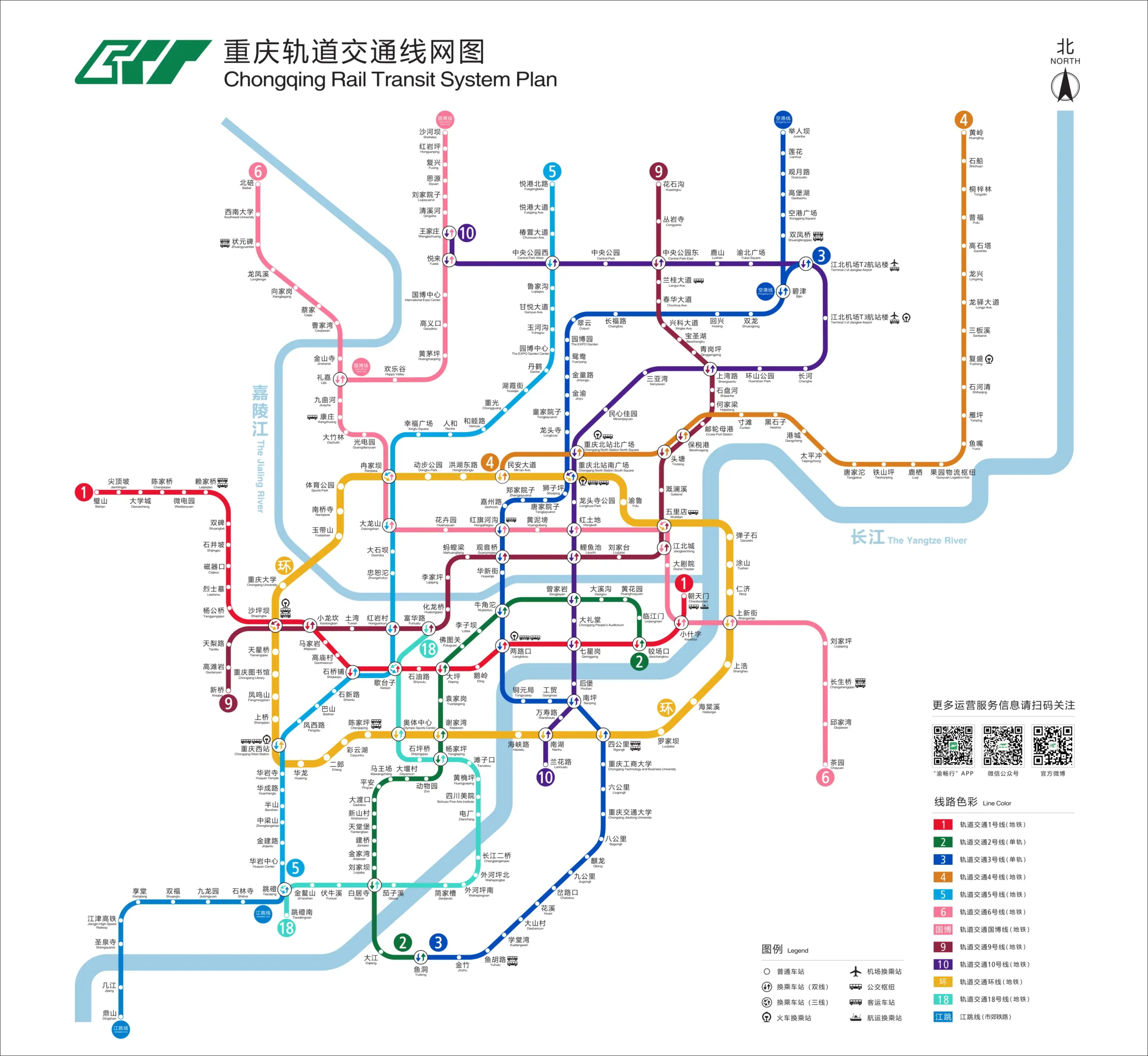
Here it is — the clearest Chongqing metro map in English you’ll find online. 13 lines. 271 stations. 593 kilometers of track cutting through mountains, under rivers, and yes, straight through the 11th floor of a residential tower at Liziba.
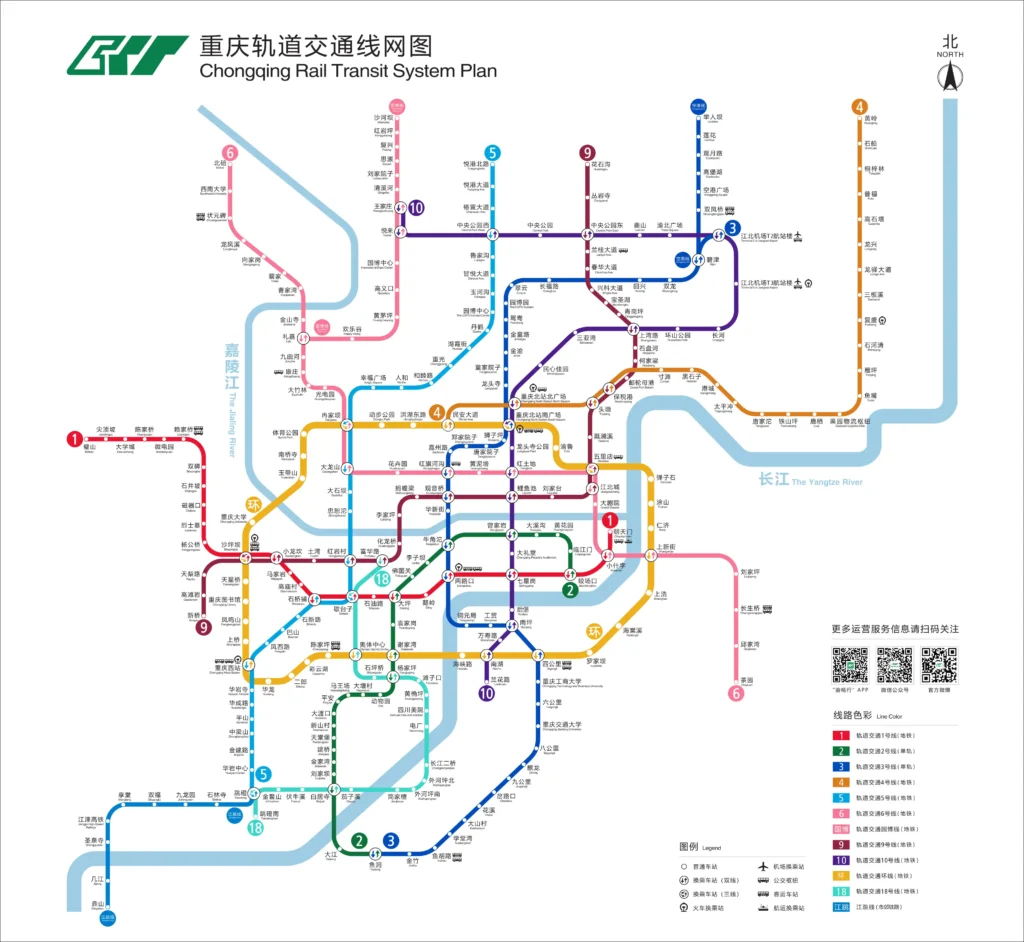
📥 Download the map: Get the printable bilingual PDF here — save it to your phone before you land, because station Wi-Fi in Chongqing is not a guarantee. Or just screenshot the image above. Either one works offline.
Below, you’ll find everything else: which lines actually matter to a visitor, how to pay without a Chinese bank card, what to avoid during rush hour, and the one transfer station where the walk alone takes eight minutes. If you’re pulling together a broader trip, our Chongqing itinerary guide covers everything beyond the rails.
- Chongqing Metro Map — Full System Overview
- Chongqing Metro Lines & Route Map — The Ones You'll Actually Use
- Key Metro Stations — The Ones Worth Getting Off At
- How to Use Chongqing Metro — Tickets, Fares & Apps
- Chongqing Metro Operating Hours & Airport Connections
- Quick FAQ
- Before You Go — A 30-Second Checklist
Chongqing Metro Map — Full System Overview
A Chongqing subway map looks different from anything you’ve seen in New York, London, or Tokyo — not because the design is unusual, but because the system itself is a hybrid. Half classic underground metro, half elevated monorail snaking through mountains and over rivers.
The official name is Chongqing Rail Transit (CRT). Locals might say “subway,” “metro,” or “light rail” interchangeably, which adds to the confusion. Here’s what matters: the map you download will show both heavy-rail metro lines (the ones that run underground, like a traditional subway) and straddle-beam monorail lines (the ones on elevated concrete tracks, built because Chongqing’s mountain terrain makes tunneling impossible in some areas).
As of early 2026, the network runs 13 lines across 271 stations, covering roughly 593 kilometers. For a tourist, that’s overwhelming. The good news: you only need to care about maybe five of them. The full official bilingual Chongqing metro map PDF — Chinese and English — is available from the Chongqing Transport Bureau. Fair warning: it may not include the newest extensions, since official updates lag behind real-world openings. Grab it anyway as your offline baseline — or use our annotated version above.
Metro Meets Monorail — Two Systems, One Map
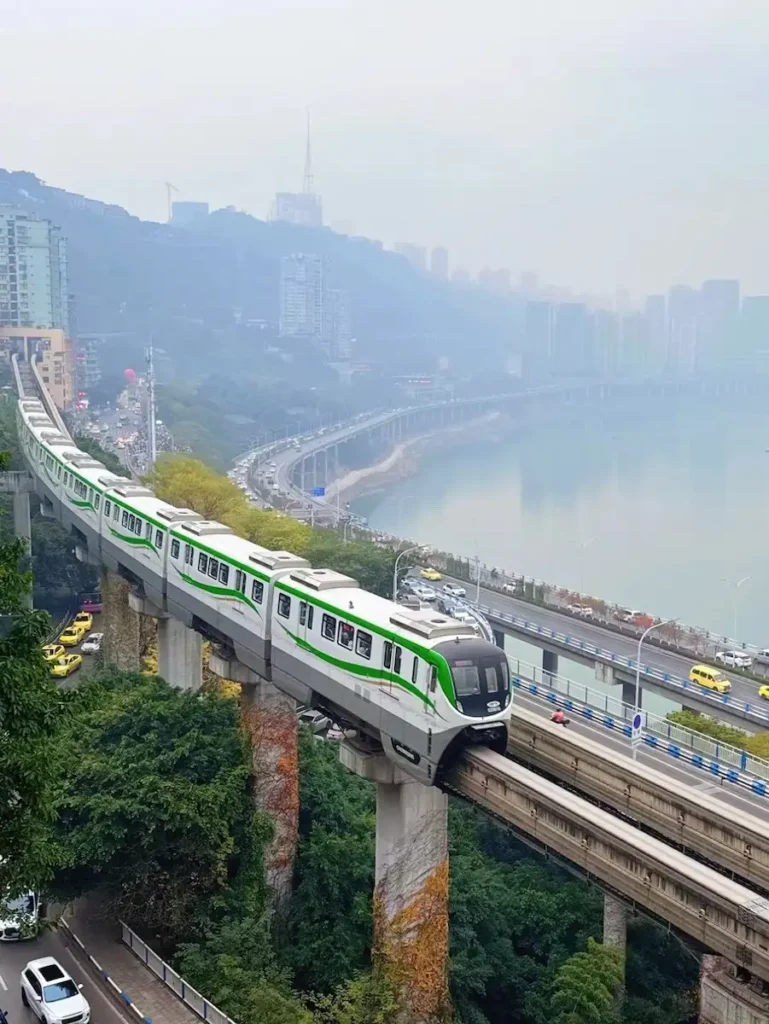
Heavy-rail lines (Lines 1, 4, 5, 6, 9, 10, 18, and the Loop Line) run mostly underground. They feel familiar — steel wheels on steel rails, platforms behind screen doors, the usual hum. Monorail lines (Lines 2 and 3) ride on elevated concrete beams. Rubber tires. Quieter. Better views. And yes, Line 2 is the one that goes through a residential building at Liziba.
Why mix two systems? Simple: Chongqing is built on mountains, sliced by the Yangtze and Jialing rivers. Tunneling through that geology costs a fortune. Elevated monorail can handle steep grades and tight turns that conventional rail can’t. You’ll notice this the moment you look at any route diagram — the lines twist in ways that make no sense until you see the terrain. The transit map isn’t just a navigation tool. It’s a portrait of a city that refused to let geography dictate where trains could go.
Chongqing Metro Lines & Route Map — The Ones You’ll Actually Use
Thirteen lines exist in the CRT system. Unless you’re visiting an industrial park in Yuzui or a hot spring in Tongliang, you’ll spend 90% of your time on four of them. Keep a copy of the map — digital or printed — and you won’t need the other nine.
| Line | Type | Why It Matters to You |
|---|---|---|
| Line 1 | Heavy Rail | East-west spine: Chaotianmen → Ciqikou ancient town. Covers Jiefangbei and Hongyadong areas. |
| Line 2 | Monorail | The scenic one. Runs along the Jialing River. Liziba Station (train-through-building). You will take photos. |
| Line 3 | Monorail | North-south artery. Connects Jiangbei Airport T2. Also the most crowded line in the system. Avoid at 8 AM. |
| Line 6 | Heavy Rail | Crosses the river. Links Hongyadong (Xiaoshizi) with Jiefangbei and the northern districts. |
| Line 10 | Heavy Rail | Airport express. Newer, faster, emptier than Line 3. Goes to T3 and T2. |
| Loop Line | Heavy Rail | Circles the city core. Key transfer hub. Connects Chongqing West and North railway stations. |
The other lines — Line 4 (far east), Line 5 (southwest), Line 9 (north-south supplement), Line 18 (Jiulongpo), Guobo Line (expo center), Jiangtiao Line (to Jiangjin), Bitong Line (to Tongliang) — exist on the official route map, but you’ll probably never touch them. For a broader look at getting around, our Chongqing transport maps page covers the full network alongside airport and train connections.
Key Metro Stations — The Ones Worth Getting Off At
Some stations are destinations in themselves. Circle these four on your map.
Liziba Station (Line 2)
Half past five in the afternoon. You’re standing on the viewing platform below Liziba with maybe 200 strangers — phones raised, tripods locked. A pale green train glides in from the elevated track and slides straight into the sixth floor of a 19-story apartment building. Not past it. Through it. The crowd erupts like they’ve just watched a magic trick.
This isn’t a theme park. It’s Chongqing Rail Transit Line 2, the first straddle-beam monorail line in China, running since 2005. The station itself occupies floors 6 through 8 of the building. Head down to street level for the classic shot. One thing: people actually live in that building. Point your camera at the train, not their windows.
Xiaoshizi Station (Line 1 & Line 6)
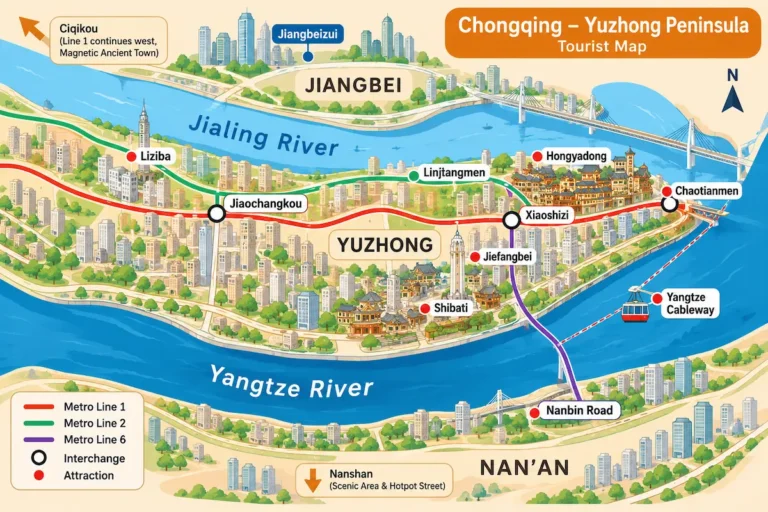
Your gateway to Hongyadong — the tiered cliffside complex that looks like a Studio Ghibli fever dream when lit up at night (for more on that, see our Chongqing at night guide). We cover the area in depth on our Hongya Cave guide. This station also serves the Yangtze River Cableway. Exits can be confusing — follow the signs for Hongyadong (洪崖洞) or the cableway entrance, not just the nearest exit.
Jiaochangkou Station (Line 1 & Line 2)
Drops you directly into Jiefangbei, Chongqing’s central pedestrian and shopping district. The People’s Liberation Monument is a 3-minute walk. This is where you start your first day. For more on the area, see our Jiefangbei guide.
Ciqikou Station (Line 1)
Ancient porcelain village turned tourist street. Crowded on weekends. Go on a weekday afternoon, eat a bowl of dan-dan noodles, walk down to the Jialing River. The station exit puts you a 10-minute walk from the old town gate. We have a dedicated guide to Ciqikou Ancient Town if you want to explore deeper.
How to Use Chongqing Metro — Tickets, Fares & Apps
You have the map. Now you need to actually get through the gate.
Single-Journey Tickets
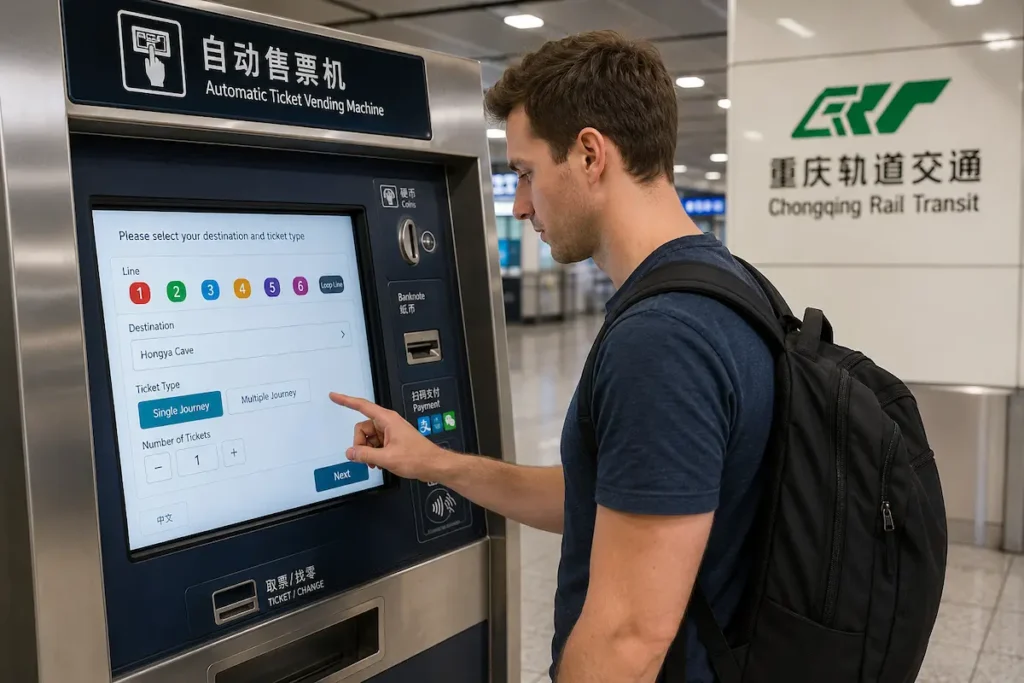
Every station has self-service ticket machines. Tap the English button (top-right corner of the screen). Select your destination station. Insert cash — yuan only. Machines take ¥1 coins, ¥5, ¥10, and ¥20 notes. A small plastic token drops out. Tap it on the gate to enter. When you exit, drop the token into the slot — it gets swallowed and recycled.
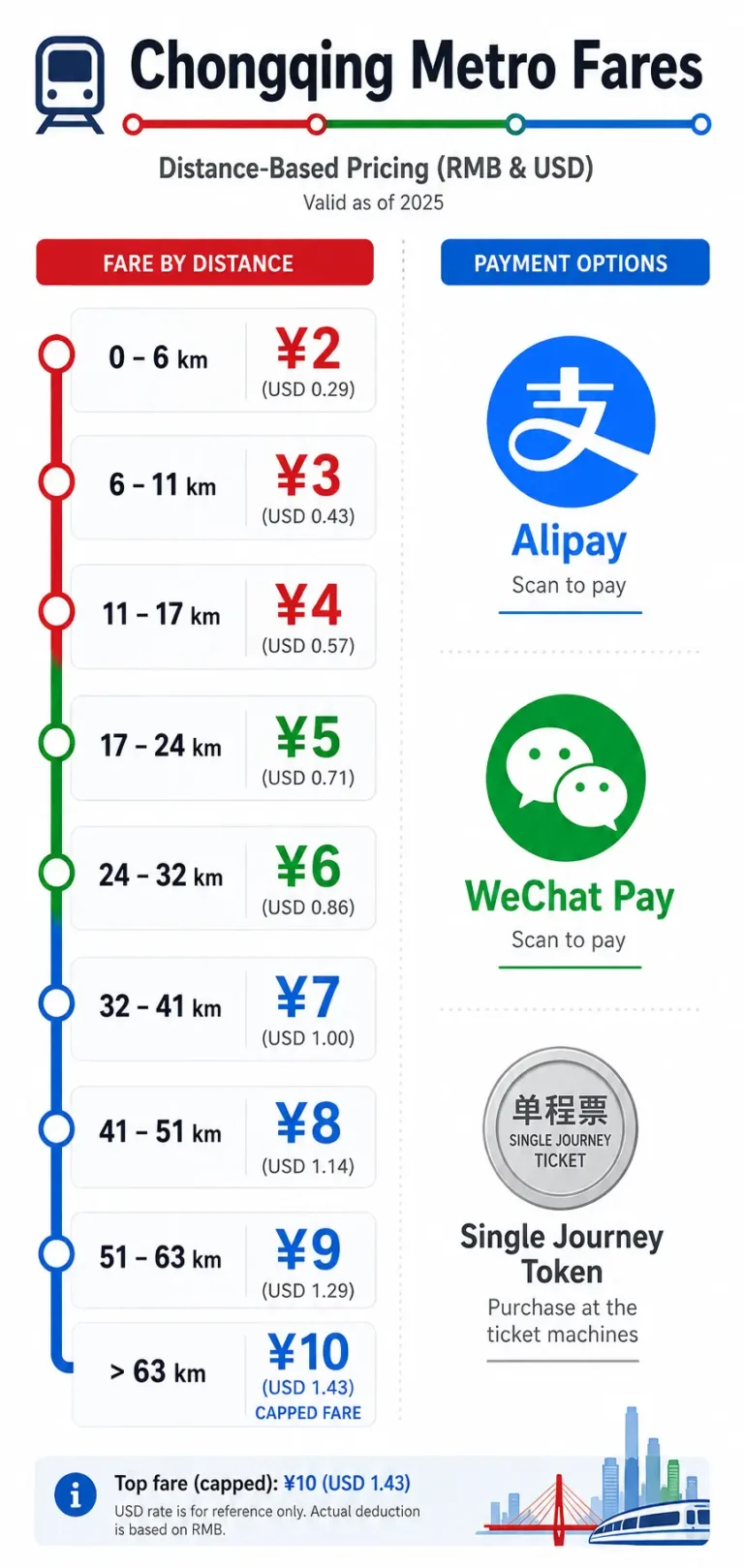
Fares are distance-based. For context on overall travel costs, check how expensive Chongqing really is:
| Distance | Price (CNY) | Price (USD) |
|---|---|---|
| 0–6 km | ¥2 | USD 0.29 |
| 6–11 km | ¥3 | USD 0.43 |
| 11–17 km | ¥4 | USD 0.57 |
| 17–24 km | ¥5 | USD 0.71 |
| 24–32 km | ¥6 | USD 0.86 |
| 32–41 km | ¥7 | USD 1.00 |
| 41–51 km | ¥8 | USD 1.14 |
| 51–63 km | ¥9 | USD 1.29 |
| 63+ km | ¥10 | USD 1.43 |
In practice, the fare caps at ¥7 (USD 1.00). You can ride from the airport to the farthest edge of the system for less than a dollar. That’s wild.
The 24-Hour Pass — ¥18 (USD 2.57)
Unlimited rides for 24 hours from first tap. Breaks even after 3–4 trips. One catch: you may only be able to buy it at staffed service counters, not the self-service machines. At the airport or major stations, look for a window with a person behind it and ask for “yī rì piào” (one-day ticket).
Paying With Alipay or WeChat — Can Foreigners Do It?
Yes, with setup. If you’ve already linked a Visa or Mastercard to Alipay or WeChat Pay, you can activate the “Public Transport” QR code feature, switch your city to Chongqing, and scan at the gate. Worth the hassle? Maybe. It’s fast once it works.
But if you just landed at Jiangbei Airport after a 12-hour flight, your phone is at 8%, and the QR code won’t load — you’ll wish you’d bought a paper ticket. Carry some yuan. Machines don’t take foreign cards. Pro tip: keep a screenshot of your destination station name in Chinese characters in your camera roll alongside an offline copy of the route map.
What Foreign Travelers Complain About
Reviews on TripAdvisor and Reddit are mostly positive. “World-class.” “Spotless.” “Better air conditioning than my apartment.” Fair. But a few things keep coming up:
Transfer walks can be brutal. Niujiaotuo Station (Line 2 → Line 3) involves a covered footbridge curving along the Jialing River. Budget 6–8 minutes just for the walk. This isn’t a cross-platform transfer — Chongqing’s terrain means some stations spread horizontally across a hillside. A glance at the route diagram won’t warn you about this. Only your legs will.
Line 3 at rush hour. (8:00–9:00 AM, 6:00–7:00 PM.) Tokyo-level crowding. If you’re heading to the airport on Line 3 during peak, leave 15 minutes earlier than you think, or take Line 10 instead.
Signage is mostly Chinese. Pinyin romanization appears on some signs, but not all. Save a screenshot of your destination station name in Chinese characters. Your phone’s photo album searches faster than any translation app.
Loud phone calls on board. Not a Chongqing exclusive. Bring noise-canceling earbuds or treat it as free cultural immersion.
Chongqing Metro Operating Hours & Airport Connections
Operating hours vary slightly by line. Most first trains depart around 6:30 AM. Last trains run between 10:30 PM and 11:00 PM. Lines 2 and 3 run slightly later at some stations. Check Amap (Gaode Maps) on the day for real-time schedules — it’s more reliable than memorizing a table. Your downloaded PDF map won’t include live times, so pair it with a navigation app.
From Jiangbei Airport to Downtown
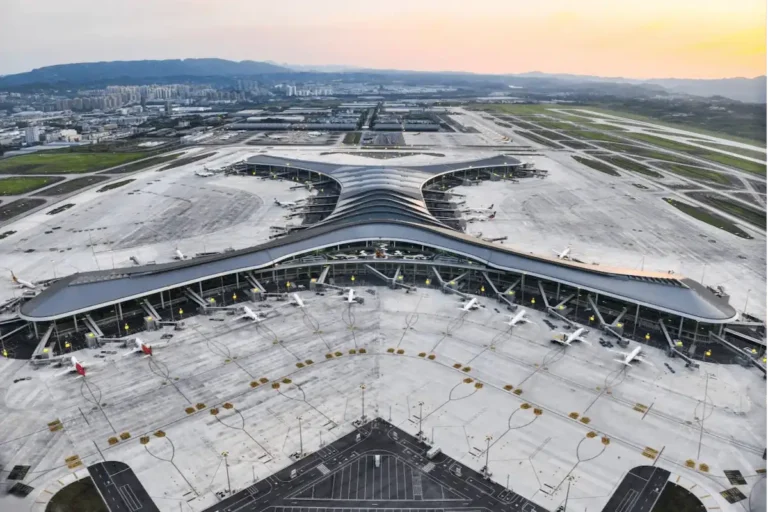
Terminal 3: Take Line 10 (direction: Lanhua Road). Transfer to Line 6 at Hongtudi Station for the Jiefangbei area, or to the Loop Line at Chongqing North Station North Square. Faster than a taxi — Chongqing surface traffic is punishing. For more airport logistics, see our Chongqing airport transport overview.
Terminal 2: Line 3 or Line 10. If you’re going to Guanyinqiao or the city center, Line 10 is the smarter choice — newer trains, fewer people than Line 3.
Chongqing North Railway Station: Loop Line (South Square), Line 3 and Line 10 (North Square). Confirm which square your train departs from before you arrive — they’re not close.
Chongqing West Railway Station: Loop Line and Line 5. Direct access from the station concourse.
A Note on the Official App
The official CRT app is called Yuchangxing (渝畅行). It’s Chinese-only. No English interface. For English-speaking visitors, the better combo is Metroman (offline CRT route map in English) for planning, plus Amap or Baidu Maps for real-time navigation. Neither is perfect. Together they work. And if all else fails, the map screenshot from the top of this page will get you where you need to go.
Quick FAQ
Can I eat or drink on the metro?
No. Eating and drinking are prohibited across all Chongqing rail services.
Do ticket machines accept Visa or Mastercard?
No. Cash (yuan) or Chinese mobile payment only. Prepare some yuan before you arrive.
Is there luggage storage at metro stations?
Some major stations have lockers. Don’t count on it. Drop your bags at your Chongqing hotel first.
Does Citymapper work in Chongqing?
Limited support. Metroman is the better offline option for a Chongqing subway map on your phone.
What’s the best way to get a Chongqing metro map right now?
Three options — at least one will work: download the official bilingual PDF from the Transport Bureau, screenshot the annotated map at the top of this page, or grab a paper copy at the airport service counter if you spot one.
Before You Go — A 30-Second Checklist
- Download the Chongqing metro map PDF and save it offline.
- Screenshot the line overview and station-attraction table from this page.
- Carry at least ¥50 (USD 7.14) in small bills for ticket machines.
- Set up Alipay or WeChat Pay transport QR before your trip if you plan to use it.
- Mark your hotel’s nearest metro station on your phone map.
- Save the Chinese characters for your destination stations — screenshots beat memory every time.
- Avoid Line 3 between 8:00–9:00 AM and 6:00–7:00 PM unless you want the full experience.
- If you’re riding 3+ segments in one day, buy the 24-hour pass (¥18 / USD 2.57) at a staffed counter.
- Bookmark this guide — you’ll want it offline when the station Wi-Fi fails.
Chongqing’s metro is not the subway you know. It climbs hills. It crosses rivers on elevated tracks. It passes through the middle of someone’s apartment building at 40 kilometers per hour. It costs less than a dollar to ride clear across the city. And it’s clean enough to make most European metro systems look like a before photo.
You came looking for a metro map. But the real question isn’t where the lines go. It’s whether you’ll look up from your phone when the train slides out of the tunnel and the Jialing River opens up below you — and you realize the map was only ever half the story.
Ke Ping — Founder, Chongqing Travels
Certified China Travel Specialist · Certificate details
This guide can become your real trip
Instead of figuring out the mountain city's vertical maze alone, let me and our team build your perfect Chongqing trip — from Hongyadong's neon lights to the best late-night hot pot.
📋 Plan My Chongqing Trip