How Expensive Is Chongqing? A Complete Travel Cost & Budget Guide (2026)
So, how expensive is Chongqing really? If you’re scrolling through travel forums trying to figure out whether this sprawling mountain megacity will wreck your budget, here’s the short answer: Chongqing is one of China’s most wallet-friendly major destinations. Whether you’re a backpacker counting every yuan or a comfort-seeker who enjoys nice river views, this city delivers outsized experiences for surprisingly modest prices.
You can wake up to a bowl of spicy Chongqing noodles for under $2, ride a metro through a residential building, and snap jaw-dropping skyline photos from free riverside viewpoints. With a bit more budget, you can drift off in a hotel overlooking where two mighty rivers collide, dive into a bubbling beef-fat hot pot, or hire a car to chase down a UNESCO World Natural Heritage site. If you’re exploring what to do across China, you might also want to check out things to do in Chongqing for more inspiration beyond the budget breakdown.
This 2026 Chongqing travel cost guide breaks everything down into three clear budget tiers. No vague estimates—just real numbers to help you plan.
How Much Does a Trip to Chongqing Cost? A Quick Overview
Before we dive into the details, here’s a snapshot of what to expect. These numbers cover accommodation, food, local transport, and attraction tickets per person. They do not include flights or high-speed trains to reach the city.
| Expense Category | Backpacker Budget | Mid-Range Comfort | High-End Experience |
|---|---|---|---|
| Accommodation (per night) | 40-150 CNY ($6-21) | 200-450 CNY ($28-62) | 600-2,000+ CNY ($83-278+) |
| Food & Drink (per day) | 50-80 CNY ($7-11) | 100-200 CNY ($14-28) | 300-600+ CNY ($42-83+) |
| Local Transport (per day) | 10-30 CNY ($1-4) | 30-100 CNY ($4-14) | 100-400 CNY ($14-55) |
| Attractions (per day) | 0-30 CNY ($0-4) | 50-150 CNY ($7-21) | 150-400 CNY ($21-55) |
| Total: 3 Days / 2 Nights | 500-1,000 CNY ($69-139) | 1,500-3,000 CNY ($208-417) | 4,000-8,000+ CNY ($555-1,110+) |
Real travelers, real spending: One visitor explored Chongqing for four full days with three friends, covering round-trip flights and everything else—the cost came to roughly 2,600 CNY (361)perperson Another couple wandering Chongqing and the Yangtze River towns for five days (including Fengjie and Wushan) spent about 5,400CNY(750) total for two people, with flights and high-speed trains eating up half that amount.
Accommodation in Chongqing: Location Beats Star Ratings
When asking “how expensive is Chongqing for accommodation,” know this: where you sleep matters more than how many stars the hotel has. Pick the right neighborhood and you’ll step outside straight into the scenery, with most major sights within walking distance. For a broader look at lodging options, accommodation in Chongqing covers everything from hostels to five-star river-view rooms.
Best Areas to Stay in Chongqing
Jiefangbei / Hongyadong Area: The absolute center. You can walk to Hongyadong at night, hop on the Yangtze River Cableway, and explore the Jiefangbei pedestrian streets. Ideal for first-timers figuring out their Chongqing budget.
Guanyinqiao Area: This is where young locals hang out. The streets around you buzz with authentic hot pot joints, noodle shops, and skewer restaurants. Prices here tend to be slightly gentler than in Jiefangbei.
Nanbin Road Area: South bank of the Yangtze, facing the Yuzhong Peninsula skyline. You can watch the two-river nightscape from your bed. Perfect if you’re after something romantic and willing to stretch your accommodation budget a little.
Chongqing Accommodation Prices by Budget
Backpacker (40-150 CNY /6−21pernight): A dorm bed in a hostel runs about 40 CNY (6)For a private double room in a decent budget hotel or guesthouse, expect around 150 CNY ($21).
Mid-Range Comfort (200-450 CNY /28−62pernight):
This is where most visitors land . You get solid chain hotels or boutique guesthouses in prime locations — places like Ji Hotel ( 250 − 380 CNY / 35 – 53 near Jiefangbei or Guanyinqiao ) or design-forward riverside stays like Hongya Dieyuan Hotel from about 350 CNY ( $ 49 ) .
High-End Experience (600-2,000+ CNY /83−278+pernight):
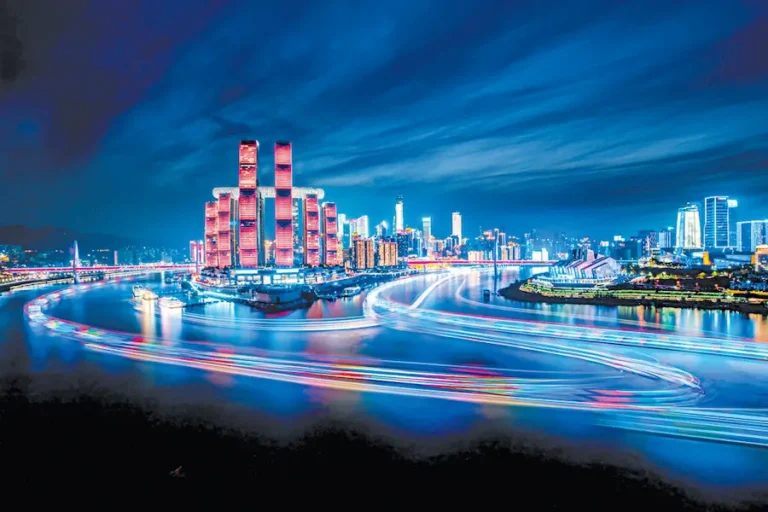
The JW Marriott sits in the heart of Jiefangbei. The Raffles City Chongqing, shaped like a giant ship at the confluence of the Yangtze and Jialing rivers, defines the luxury end of the spectrum. Some rooms at the Atour SH Hotel offer Hongyadong night views from your bathtub (peak season: roughly 700CNY/97 and up).
Booking tip for managing your Chongqing travel costs: In peak seasons (March-May, September-November, and Chinese holidays like Spring Festival and National Day), hotel prices can jump 20-30%. Riverside-view rooms vanish fast. Lock in your booking 2-3 weeks ahead.
Food Costs in Chongqing: Street Stalls to Hot Pot Feasts
The soul of Chongqing’s food scene hides in tiny, no-frills eateries tucked into residential alleys. Locals call them “fly restaurants”—the kind of places where the decor is forgettable but the flavors stay with you for years. Eating well here doesn’t push up your Chongqing budget much at all. If you want to dive deeper into the city’s culinary scene, a dedicated Chongqing food tour can take you straight to the hidden gems locals swear by.
Breakfast & Street Snacks (8-20 CNY / $1-3)
Chongqing Noodles / Pea Noodles: 8-12 CNY ($1-1.70). This is the city’s national breakfast: springy wheat noodles drenched in chili oil, Sichuan pepper, and topped with soft braised peas. Follow the line of locals outside a small shop—places like Huashi Pea Noodles near Jiefangbei reward the early riser.
Chaoshou (Wontons): 10-18 CNY ($1.40-2.50). Served in clear broth, chili oil, or chicken soup. If your tongue needs a break from the heat, go for the mild broth version.
Douhua Fan (Tofu Rice): ~15 CNY ($2). A Chongqing original: silky soft tofu with a tangy chili dipping sauce, served alongside a bowl of rice.
Street Desserts: 5-10 CNY ($0.70-1.40). After a fiery meal, look for bingfen (ice jelly), lianggao (sweet rice cake), or icy glutinous rice balls. They douse the burn instantly and taste like summer in a bowl.
Main Meals (40-150 CNY / $6-21 per person)
Chongqing Hot Pot: 50–80 CNY (7–11 USD) per person at old-school joints tucked beneath apartment blocks. Trendier or well-known brands, like Peijie Old Hot Pot, run around 100–150 CNY (14–21 USD).
Smart ordering tip: ask for a yuanyang pot — half fiery red broth, half mild.
Must-try ingredients: tripe, duck intestine, and tender beef slices. If your stomach isn’t used to rich beef-fat broths, bring along some digestive aids, just in case.
Jianghu Cuisine: 40-100 CNY ($6-14) per person. Think of this as Chongqing-style “big-plate cooking”—hearty, bold, and swimming in oil. Signature dishes include Laifeng fish, spring-water chicken, and taro chicken.
Heads up: even the vegetables here arrive glossy with oil. A polite “shao you shao yan” (less oil, less salt) can work wonders.
Chuan Chuan Xiang (Skewer Hot Pot): Even cheaper than hot pot. You grab skewers of whatever catches your eye and pay by the stick count. Total freedom, minimal damage to your Chongqing travel budget.
Edible Souvenirs (From 15 CNY / $2)
Hot Pot Base: Grab a packet of “Qiaotou” brand from a local supermarket like Yonghui Supermarket—much cheaper than tourist-shop versions.
Chen’s Mahua (Twisted Dough Sticks): A Ciqikou Ancient Town specialty, around 15 CNY ($2) per jin (500g).
Getting Around Chongqing: Transport Costs in an 8D City
Chongqing is built on mountains and sliced through by rivers. The result? One of the world’s most surreal urban transport systems—metros that tunnel through apartment blocks, cable cars that swing across the Yangtze, and outdoor escalators that climb over 100 meters. Riding these things is an attraction in itself, and figuring out how expensive is Chongqing transport will pleasantly surprise you.
Metro (Light Rail): Under 10 CNY ($1.40) per Day
The metro network covers nearly every downtown attraction. Fares start at just 2 CNY ($0.28). Download the “Yu Kuai Ma” or “Yu Chang Xing” app to scan-and-ride straight from your phone, with discounts and free transfers within one hour.
Buses: Flat 2 CNY ($0.28)
All regular buses cost 2 CNY per ride. Bus route 503 has become famous for stringing together multiple hot spots for just those two yuan.
Unique Transport Experiences
Yangtze River Cableway: 20 CNY ($2.80) one way. This is China’s last remaining urban river cable car, stretching 1,166 meters across the Yangtze. The crossing takes about four minutes, and the aerial view of both riverbanks is infinitely more dramatic than anything you’ll see from street level. Ride from the South Bank to Yuzhong for the best angle. Peak-season queues can get intense—arrive before 8 am or after 8 pm to dodge the crowds.
Crown Escalator: A paid outdoor escalator connecting two streets, running 112 meters long for just a couple of yuan. It’s a wonderfully strange way to grasp how vertical this city really is.
Two Rivers Ferry: Board at Chaotianmen Pier and cross to the south bank. A cheap, breezy ride right at the Yangtze-Jialing confluence.
Taxis & Ride-Hailing: Surprisingly Affordable in Off-Peak
Taxi flagfall is 10 CNY ($1.40). Most trips between downtown attractions cost 15-25 CNY ($2-3.50). Ride-hailing apps work seamlessly. Budgeting 50-100 CNY ($7-14) per day for rides usually suffices. In smaller towns around Chongqing like Wushan, ride-hailing can dip to absurdly cheap levels—one traveler reported paying just 6 CNY ($0.83) for a two-kilometer trip.
Hop-On Hop-Off Buses: 6-158 CNY ($1-22)
Various sightseeing routes exist, with prices ranging widely depending on the line.
Critical packing advice for managing your Chongqing travel costs and sanity: The entire city is slopes and staircases. Comfortable sneakers are non-negotiable. Also, GPS apps lose their minds in this 3D landscape—a map might show a 100-meter walk, but reality demands you scale a steep staircase cutting through a hillside. Ask locals for directions. Street signs beat smartphone screens here.
How Expensive Is Chongqing for Sightseeing? Ticket Prices Explained
Chongqing’s core magic—the cliff-hugging architecture, the churning rivers, the electric nightscape—costs nothing to admire. What does cost money are the world-class natural and cultural heritage sites sitting just outside the city. Understanding which attractions are free and which require tickets helps you dial your Chongqing budget up or down with precision. If you’re planning a longer trip, a well-structured Chongqing itinerary 4 days can help you balance free sights with worthwhile paid excursions.
Free Must-See Sights
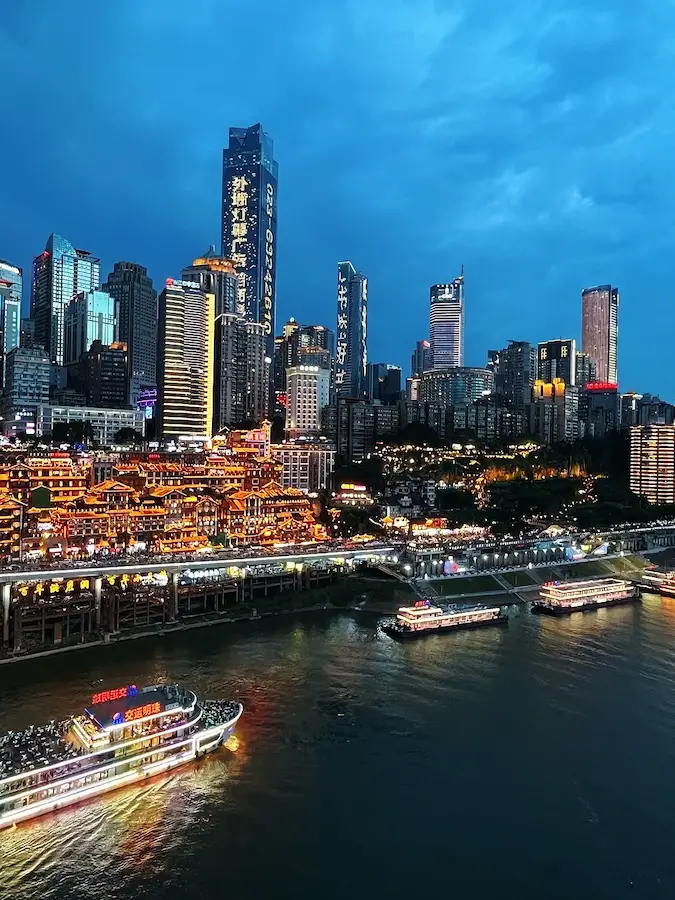
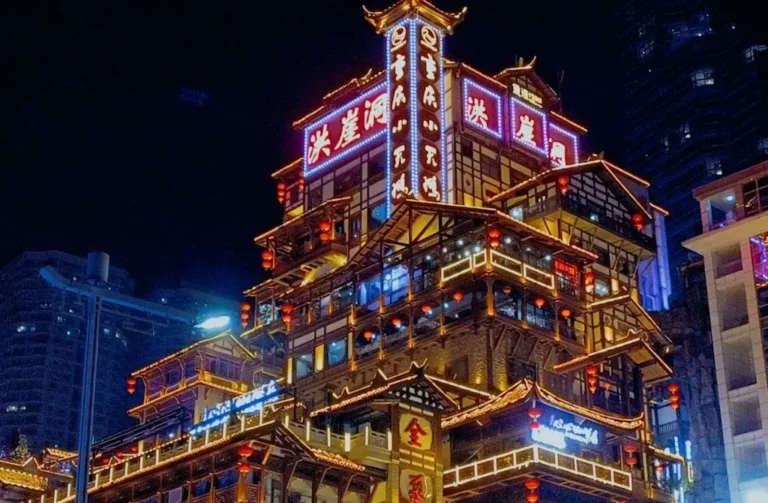
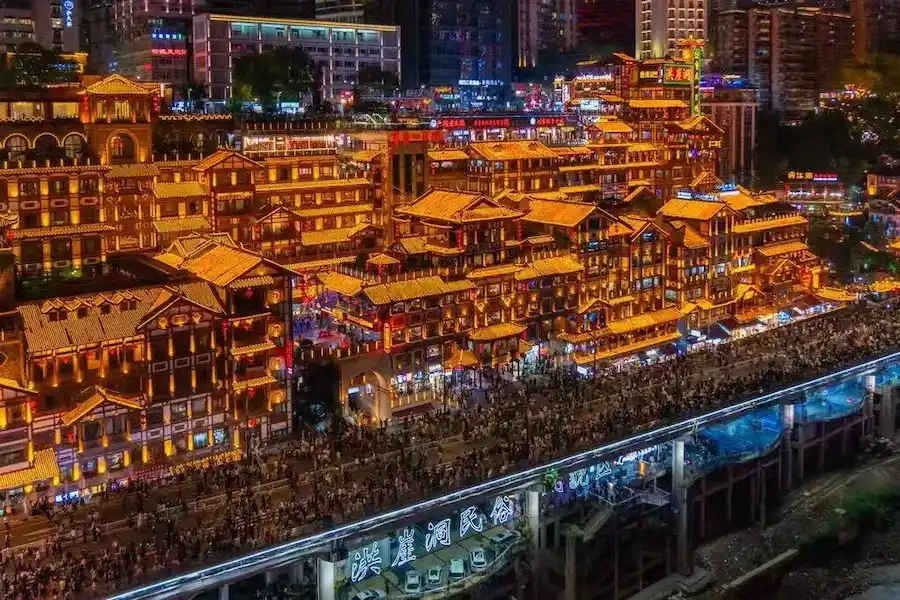
Hongyadong: An 11-story stilt-house complex clinging to the riverside cliff. As dusk falls and the lights flicker on, the whole thing glows gold and reflects into the Jialing River like a scene pulled straight from an animated film. Free entry. Best photo spot: stand on the opposite Qiansimen Bridge or the Jialing riverbank. Come after 7:30 pm.
Jiefangbei: The city’s central monument, surrounded by pedestrian streets and shopping malls.
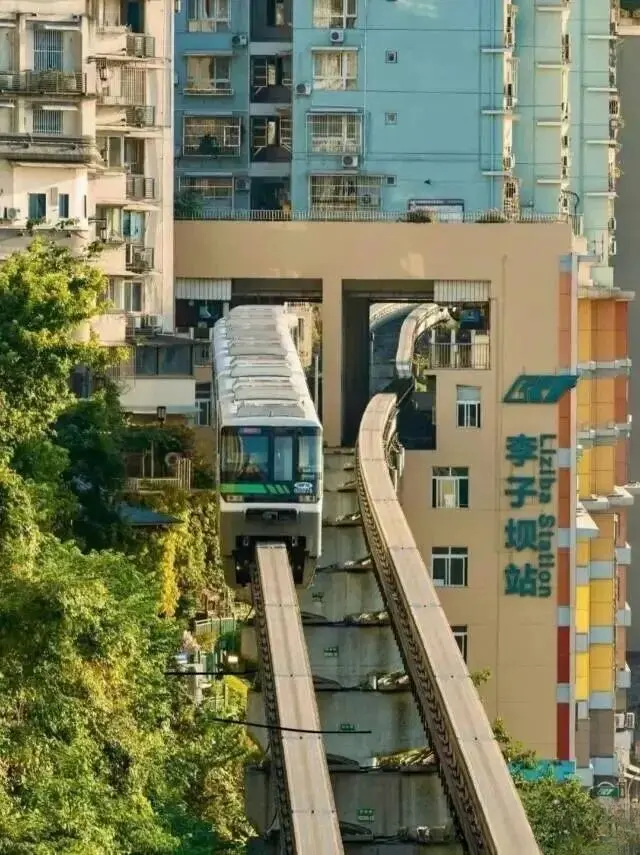
Liziba Metro Through Building: Stand across the road and watch Line 2 trains glide straight through the middle of a residential tower. Free to watch. Free to ride through it yourself.
Ciqikou Ancient Town: A thousand-year-old neighborhood of stone alleys and timber buildings. Free entry. Weekends get packed—aim for before 9 am or after 5 pm.
Mountain City Trails & Baixiangju: Free, open-air slices of old Chongqing life, perfect for wandering.
Worthwhile Paid Attractions Near Chongqing
| Attraction | Ticket Price | What to Know |
|---|---|---|
| Dazu Rock Carvings | From 110 CNY ($15) | A UNESCO World Heritage site and the final peak of Chinese grotto art. The highlight at Baoding Mountain is the breathtaking “Thousand-Hand Guanyin.” It takes 1.5-2 hours by high-speed train from downtown. Strongly consider hiring an official guide at the gate (200-300 CNY / $28-42) to decode the 800-year-old stories carved into the cliffs. |
| Wulong Three Natural Bridges | ~125-155 CNY ($17-22) | A UNESCO Natural Heritage site: three colossal stone arches spanning a massive sinkhole. This is where Transformers 4 filmed some of its otherworldly scenes. About 2.5 hours by train from Chongqing. Combine with a visit to Fairy Mountain for a full day trip. |
| Fairy Mountain National Forest Park | From 50 CNY ($7) | Alpine meadows at 1,600-2,000 meters above sea level, often described as a little slice of Switzerland in China. In summer, it’s roughly 10 degrees Celsius cooler than the city. Visit alongside the Three Bridges, and consider staying one night on the mountain for star-filled skies. |
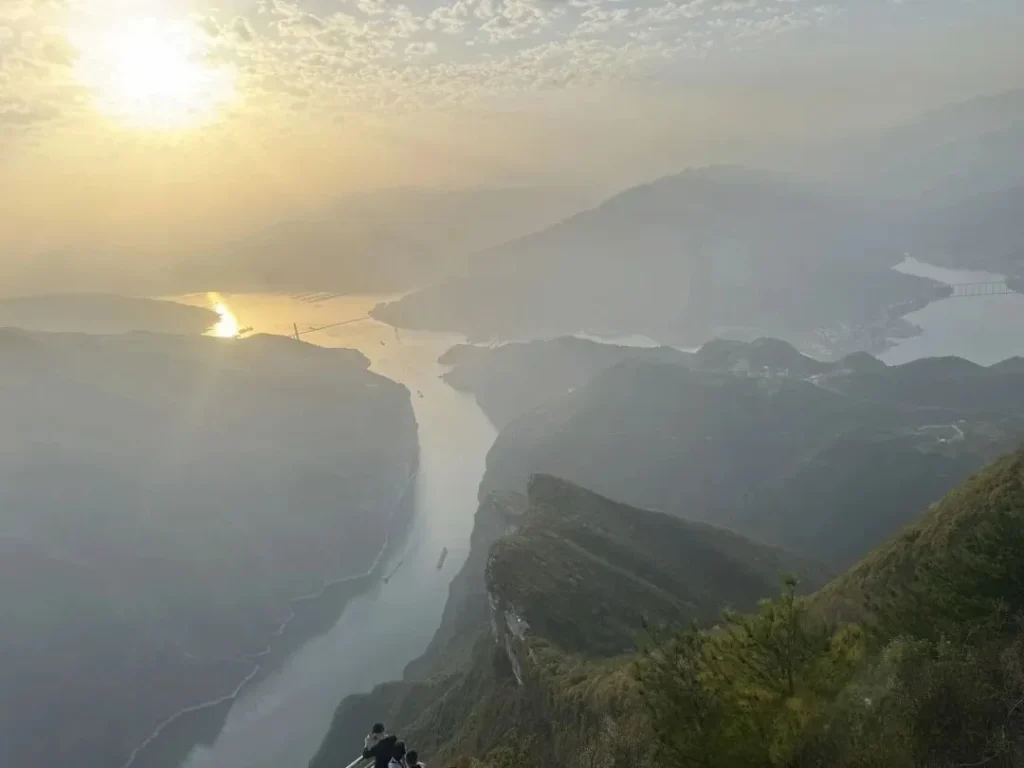
| Fengjie: Summit of the Three Gorges | ~45 CNY ($6) | The best high-altitude viewpoint overlooking Qutang Gorge and Kuimen—the exact scene printed on the back of China’s 10-yuan note. About 2.5 hours by train from the city center. Pair with a visit to Baidicheng for a full day. |
| Baidicheng & Qutang Gorge | ~100 CNY ($14) | An island fortress surrounded by water on three sides, where the ancient poet Li Bai wrote his famous departure verse. The classic Kuimen river-view photo is captured here. |
| Nanshan Tree Viewing Platform | Peak: 30 CNY (4) Off−peak:15CNY(2) | The classic spot to watch the entire downtown skyline and two-river confluence light up. Arrive before dusk and wait for the city to turn golden and then electric. |
| Chongqing Zoo | 25 CNY ($3.50) | A solid option if seeing a giant panda is on your list. |
Three Chongqing Itineraries by Budget
1. The Backpacker Run (3 Days / 2 Nights, 600-1,000 CNY / $83-139 per person)
– Accommodation: Hostel or budget guesthouse, ~160 CNY ($22) for two nights.
– Food: Noodle breakfasts, old hot pot joints, and jianghu eateries, ~200 CNY ($28) for two days.
– Transport: Metro and buses all the way, with maybe one specialty ride, ~40 CNY ($6) total.
– Sights: Stick to free iconic spots (Hongyadong, Liziba, Ciqikou, Mountain City Trails). Add 20 CNY ($2.80) if you ride the Yangtze Cableway.
– Best for: Strict-budget backpackers who still want deep city immersion.
2. The Classic Comfort Trip (3 Days / 2 Nights, 1,500-3,000 CNY / $208-417 per person)
– Accommodation: Solid chain hotel or guesthouse in Jiefangbei or Guanyinqiao, ~700 CNY ($97) for two nights.
– Food: The full tour—hot pot, noodles, jianghu cuisine, skewers, ~400 CNY ($55) for two days.
– Transport: Metro plus occasional taxis, ~100 CNY ($14).
– Sights: 1-2 paid attractions: the Yangtze Cableway (20 CNY / $2.80) plus Dazu Rock Carvings | Baoding Mountain 115 CNY peak / 100 CNY off-peak (USD 16 / 14); Baoding + Beishan combo 140 CNY peak (USD 20) | A UNESCO World Heritage site and the final peak of Chinese grotto art. Timed entry: Baoding last entry 16:10. The combo ticket stays valid for three days and includes Nanshan, Shimenshan and Shizhuanshan once each.
– Best for: Most travelers who want comfort without waste.
3. The Deep-Dive Experience (5 Days / 4 Nights, 4,000-6,000+ CNY / $555-833+ per person)
– Extended itinerary: The above mid-range plan, plus two extra days for a natural heritage day trip to Wulong (Three Bridges + Fairy Mountain) or a Yangtze culture day trip to Fengjie.
– Accommodation upgrade: A few nights in riverside-view rooms.
– Transport upgrade: Private car or small-group day tour for the out-of-town trips; taxis everywhere within the city.
– Best for: Travelers who want to properly explore Chongqing and its surrounding UNESCO sites without budget constraints holding them back.
Smart Ways to Keep Your Chongqing Travel Costs Down
Book accommodation early. This is the single most effective way to save in peak season, especially for river-view rooms and character guesthouses.
Eat where the locals eat. Walk past the main tourist drag and duck into a side alley or residential block. The food gets better, the prices get smaller, and the experience gets real.
Respect the hot pot’s power. If you’re not built for nuclear spice and heavy oil, order the yuanyang pot or ask for “wei la” (mild heat). Also, plan to eat hot pot the night before you plan to change clothes—that beef-fat aroma clings to fabric like a memory.
Use local transport apps smartly. “Yu Chang Xing” or “Yu Kuai Ma” for metro rides knocks down costs with built-in discounts and free transfer windows. For short hops within the city, ride-hailing apps stay surprisingly cheap.
Check ticket policies in advance. During peak travel periods, big attractions like Dazu Rock Carvings and Wulong Three Bridges may require online reservations. Students should carry their student ID for half-price entry at many sites. Keep an eye out for multi-site passes that might bundle savings.
Skip the swelter. Chongqing in July and August is oppressively humid and hot—plus it’s domestic summer holiday rush. The sweet spots are spring (March-May) and autumn (September-November): comfortable weather, manageable crowds, and steadier prices. Before locking in your dates, check best time to visit Chongqing for a month-by-month breakdown of weather and tourist seasons.
Wear the right shoes. This might be the most important tip in this entire guide to how expensive is Chongqing. The city is nothing but slopes and staircases. Don’t bring new shoes or stiff soles. A pair of broken-in sneakers will save your feet and your mood.
Chongqing has a way of sticking with you—the heat of the hot pot on your lips, the neon glow bouncing off the river at midnight, the strangely wonderful sight of a metro train vanishing into an apartment block. And the best part? None of these demands a fat wallet. So pack those sneakers, bring your appetite, and go see what this ridiculous, beautiful city has waiting for you.
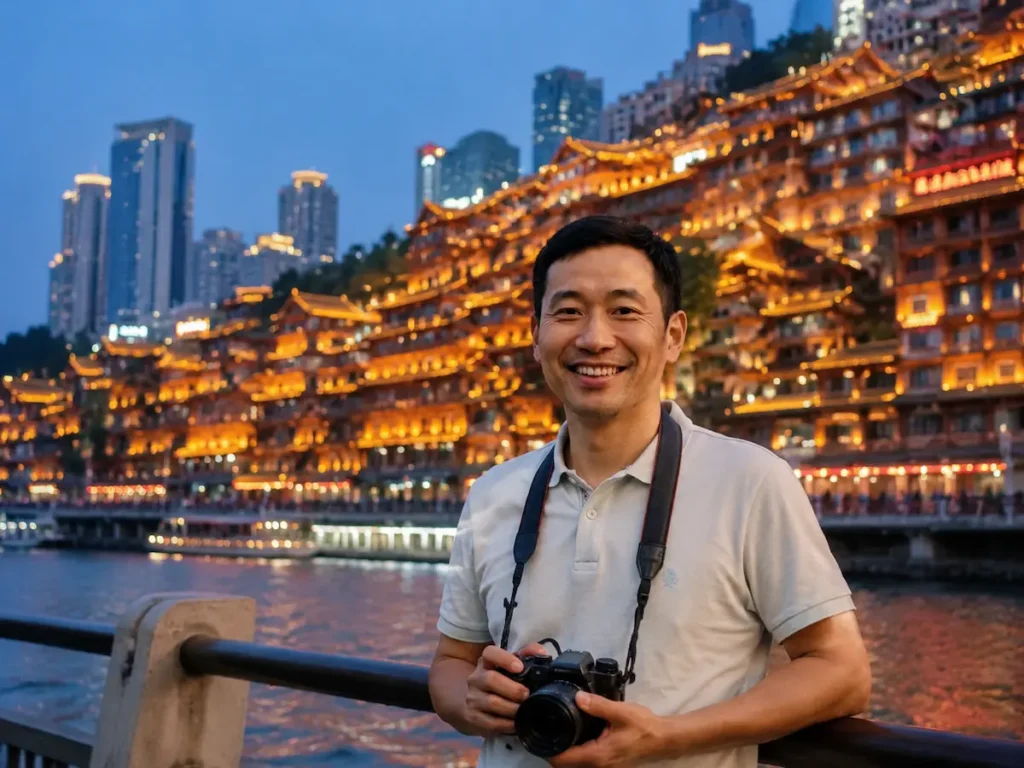
Ke Ping — Founder, Chongqing Travels
Certified China Travel Specialist · Certificate details
This guide can become your real trip
Instead of figuring out the mountain city's vertical maze alone, let me and our team build your perfect Chongqing trip — from Hongyadong's neon lights to the best late-night hot pot.
📋 Plan My Chongqing Trip