Unlocking the Artistic Secrets of Chongqing Art Museum: A Complete Guide to the “Red Chopstick Building”
1.Quick Overview
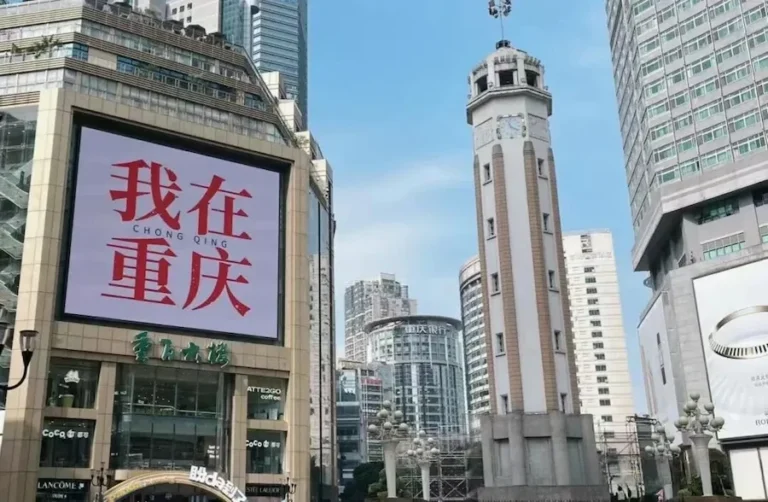
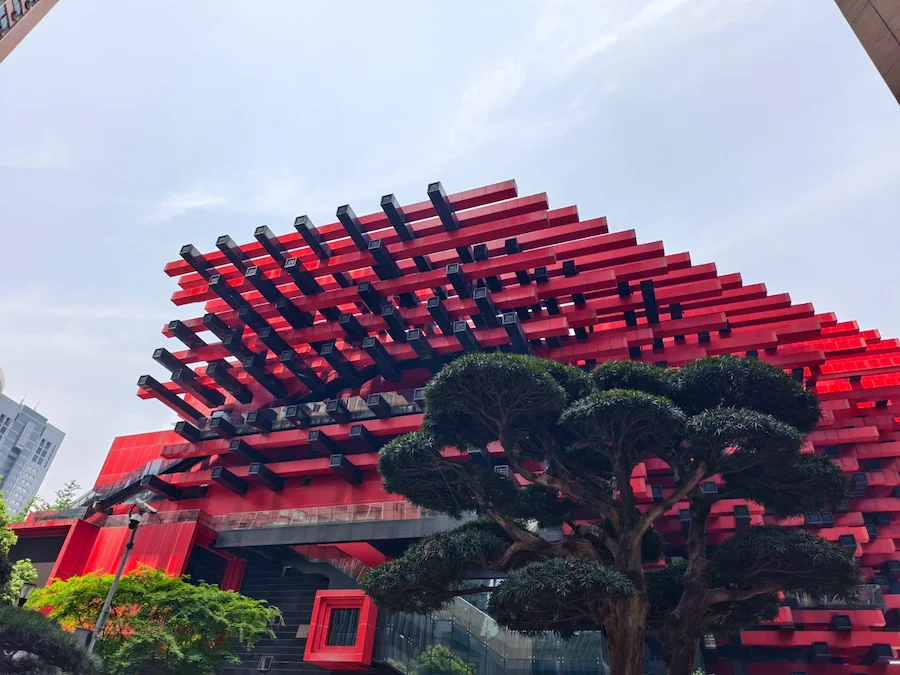
Nestled in the heart of the bustling Jiefangbei business district, the Chongqing Art Museum is impossible to miss. Locals affectionately call it the “Red Chopstick Building” because its exterior looks like thousands of crimson rods stacked together, resembling either a bundle of chopsticks or a flame dancing against the city skyline . This striking architecture alone makes it one of the top attractions in chongqing. Step inside and you’ll discover a free window into Chongqing’s evolving art scene—where traditional Chinese painting meets contemporary expression, all set against the backdrop of this vertical mountain city.
Type: Public art museum (focus on modern art, traditional Chinese painting, and printmaking)
Best time to visit: Year-round (sunny days are perfect for photographing that iconic red facade; foggy days add mystery)
Suggested duration: 1-2 hours (art lovers will want to linger longer)
Opening hours: 9:00 AM – 5:00 PM (last entry at 4:30 PM), closed Mondays except public holidays
Admission: Free (no reservation needed; special exhibitions are usually free too)
Address: 5th-6th Floor, Guotai Arts Center, 1 Linjiang Road, Yuzhong District, Chongqing
2.A Fresh Cultural Space
The Chongqing Art Museum isn’t some ancient institution—it opened its doors in 2013, born from the former Chongqing Painting Academy . While the building itself is young, its mission runs deep: showcasing and preserving the artistic heritage of the Bayu region (the cultural heart of Chongqing and its surroundings).
The museum lives inside the Guotai Arts Center, which has quickly become a Jiefangbei landmark. Those bold red-and-black beams aren’t just for show—they’re a deliberate design choice. The red beams run north-south, the black ones east-west, and together they’ve drawn comparisons to everything from traditional chopsticks to Chinese seals . One local legend says the design was inspired by hot pot, Chongqing’s signature dish . Whether you see chopsticks, flames, or abstract art, the effect is unforgettable.
Beyond exhibitions, this space also serves as a hub for artistic research, creation, and international exchange—quietly putting Chongqing on the broader art map.
3.What to See and Experience
The Building: “Chopstick Tower” or “A Thousand Arrows Through the Heart”
Even if gallery-hopping isn’t your thing, park yourself outside the Chongqing Art Museum for a while. The red-and-black geometric steel structure piles up like an explosion of building blocks, earning its playful local nicknames . Some say it resembles a burning fire; others see abstract sculpture. Either way, it’s pure visual drama.
Best photo spot: Head to the overhead bridge leading to Hongyadong. From there, you can capture the building’s full glory—wide shots to show off the crazy angles, close-ups to highlight those crisscrossing red beams . Wait for sunlight to cast geometric shadows on the ground, then step into those light spots for portraits that look like modern art themselves .
Inside: From Three Gorges Landscapes to Contemporary Voices
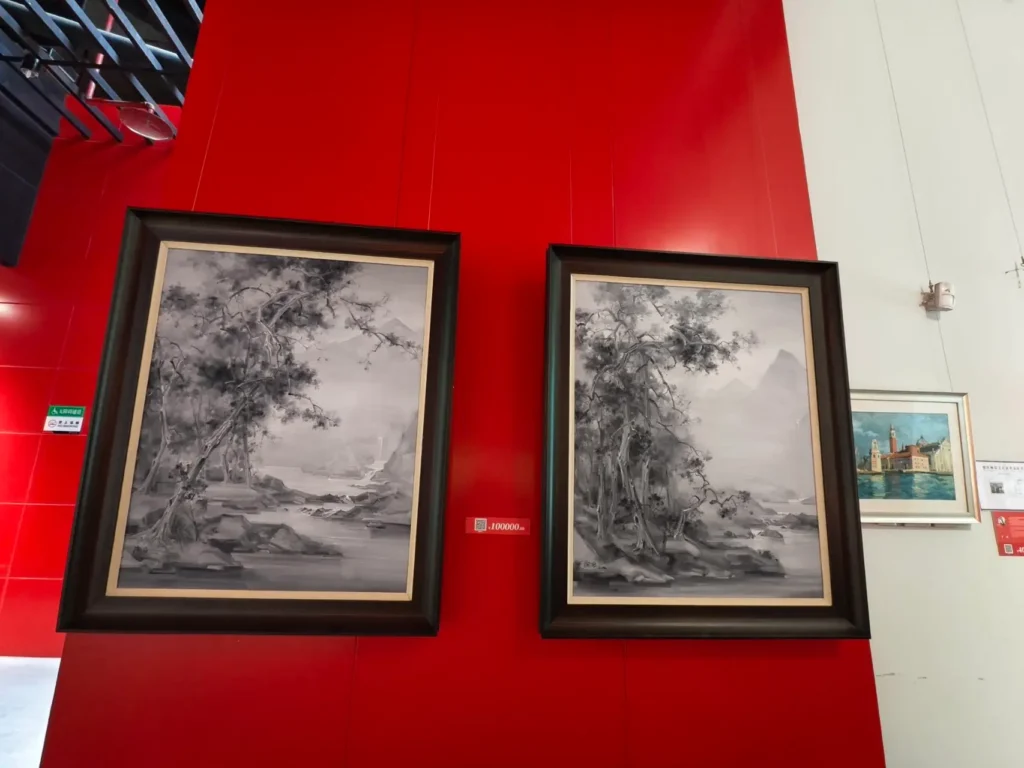
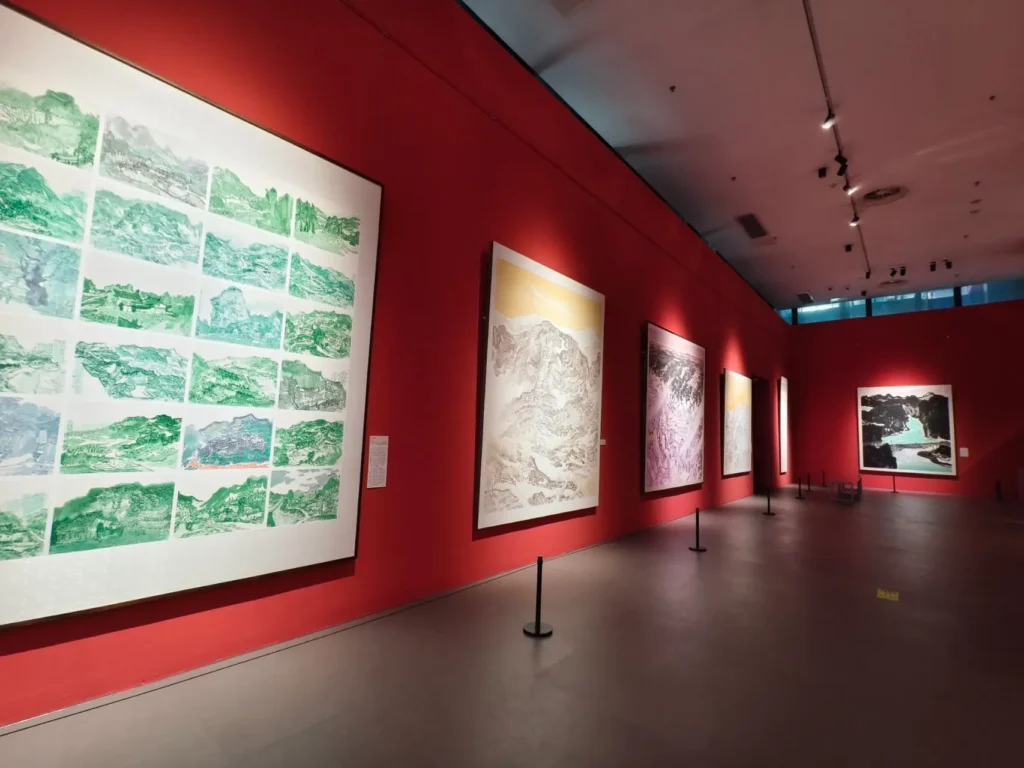
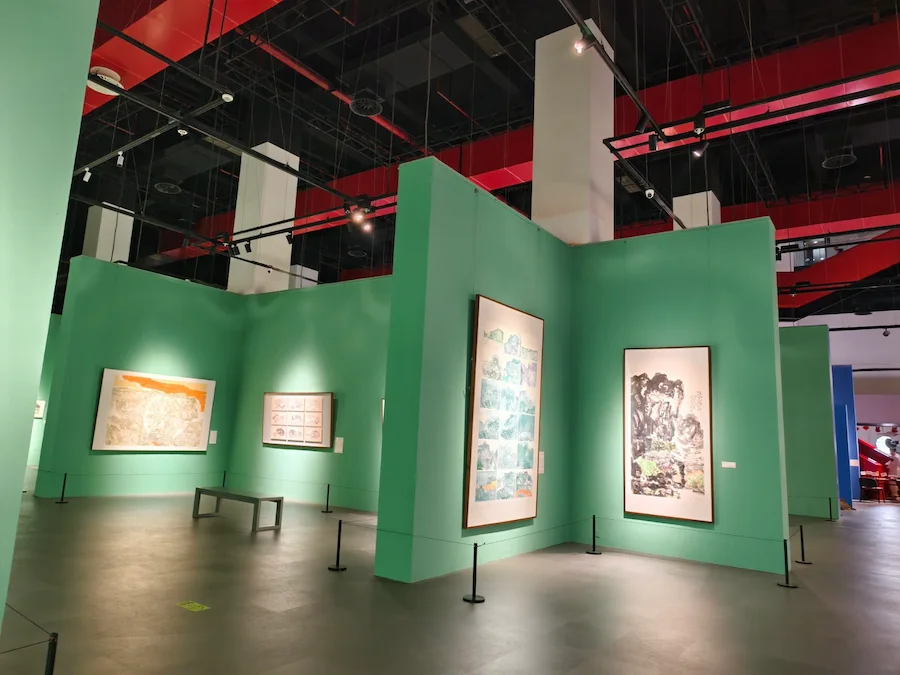
The museum spreads across two floors (5th and 6th), with seven exhibition halls and about 1,000 meters of display space . Exhibitions rotate frequently, so each visit feels fresh. The collection leans toward traditional Chinese painting, oil paintings, and printmaking, with occasional contemporary installations and sculptures .
What to look for: Many works tell Chongqing’s story. You’ll spot paintings of the mighty Yangtze Three Gorges, the city’s vertigo-inducing hillside architecture, and everyday locals—including the legendary “Bangbang Army” (porters who haul goods on bamboo poles, a disappearing slice of street life) . One recent exhibition featured Zhang Jie’s oil paintings, including a “Chongqing City Map” series capturing stilt houses and light rails threading through buildings, alongside portraits of migrant workers that preserve grassroots memories .
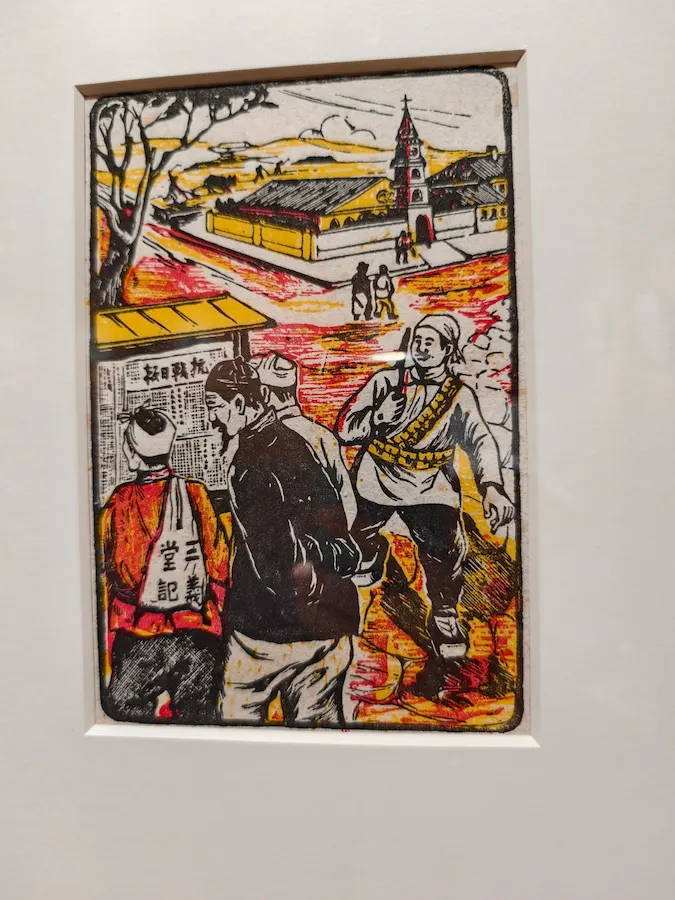
Recent highlights: If timing works in your favor, you might catch classic print exhibitions like the “Red Crag” series—powerful visuals telling stories of Chongqing’s revolutionary history . The museum also holds works by masters like Feng Jianwu and Yan Jiyuan.
Vibe: Crowds are thin here. You’ll wander peaceful halls, often alone with the art. The interior keeps that industrial edge—red steel staircases winding upward, another photo op in themselves .
Little extras: Sometimes local artisans set up stalls on the ground floor or plaza, selling handmade crafts. Worth a quick browse.
4.Eating Nearby
After soaking in art, your stomach will likely growl. Lucky for you, the Chongqing Art Museum sits smack in food paradise.
Dive into authentic Chongqing hot pot: Wander into the surrounding alleys and you’ll find atmospheric old-school hot pot joints like “Xiaoyadong Street Neighborhood Hot Pot.” Many let you order half-portions—perfect for solo travelers or small groups who want variety without the food coma . Imagine tender beef sizzling in a bubbling cauldron of beef tallow broth, spicy aroma curling upward as locals chat animatedly around you .
Stroll to Bayi Good Food Street: About 500 meters away, this pedestrian lane explodes with options. Grab a bowl of sour-spicy noodles (suan la fen), tiny Shanchéng tangyuan (sweet glutinous rice balls stuffed with sesame), and wontons in chili oil (a local favorite). It’s messy, loud, and absolutely glorious .
Sip time at Jiaotong Teahouse: For something quieter, slip into this old-school Chongqing teahouse. Bamboo chairs, covered bowls of jasmine tea, elderly men playing cards—it’s the slow life preserved amid the modern rush .
5.Expanding Your Exploration
The Chongqing Art Museum sits at the center of a web of must-see spots, all within walking distance, making it a perfect starting point for exploring the best attractions in chongqing.
Jiefangbei (5 minutes on foot): This obelisk commemorates China’s victory in the War of Resistance. Today it anchors a glitzy shopping district—perfect for feeling the city’s modern pulse .
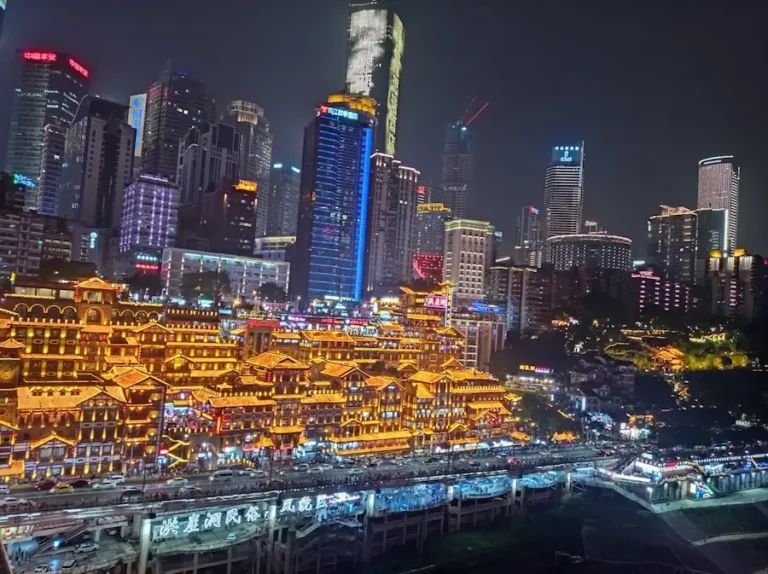
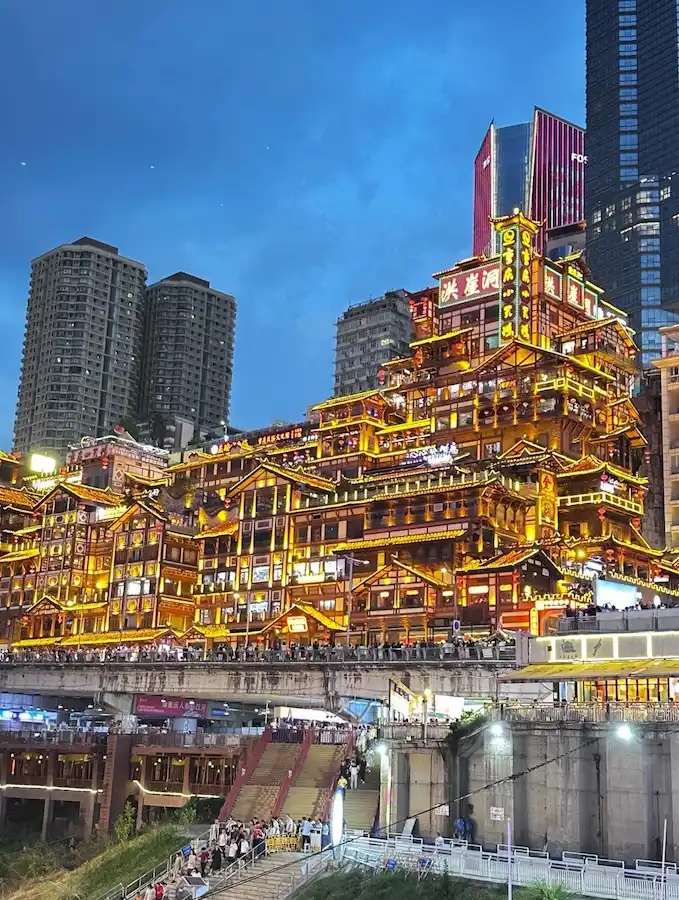
Hongyadong (10 minutes): A fairytale complex of stilted houses clinging to the cliff, exploding into gold light after sunset. It looks straight out of Spirited Away . From the museum, you can photograph it, then wander over as dusk falls.
Luohan Temple (about 10 minutes): An ancient Buddhist temple tucked between skyscrapers—over 1,000 years old. Next door, “Miao Street” pulses with trendy shops and cafes. The contrast is fascinating . Entry costs about ¥20 (~$2.75).
Yangtze River Cableway (about 15 minutes): Hop on the “air bus” for a five-minute glide across the river. You’ll see Chongqing’s crazy topography from above—skyscrapers sprouting from cliffs, bridges spanning the churning water .
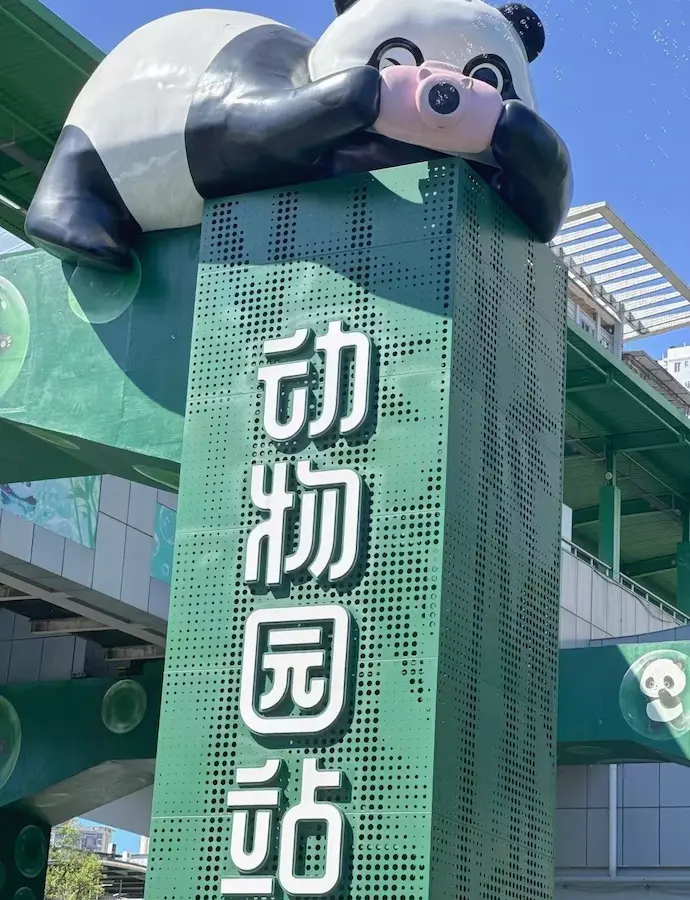
If you have time, venture a bit further to ciqikou ancient town chongqing, a historic riverside town with traditional architecture and street food. A short metro ride away, the chongqing zoo china offers a chance to see giant pandas and other wildlife.
6.Practical Details
Getting There
Metro: Take Line 2 to Linjiangmen Station, Exit D. Turn right, cross Guotai Plaza, and walk uphill about 200 meters . Alternatively, Line 1 or Line 6 to Xiaoshizi Station—about 5-8 minutes through the streets .
Bus: Routes 135, 466 to “Xiaoshizi” stop.
Getting Around Inside
No set route—wander freely. Grab an exhibition guide at the entrance (English versions sometimes available). Elevators and stairs connect the floors.
Where to Stay
Base yourself in Jiefangbei or Linjiangmen. For a curated list of places to stay, check our chongqing accommodation guide. Hotels range from international five-stars to cozy local inns, all steps from the museum and major sights .
7.Suggested Itinerary
Time needed: 1 hour inside the museum, plus photos and nearby wandering—budget 2-2.5 hours total.
A smooth flow:
Morning: Hit the Chongqing Art Museum right at 9 AM opening. Beat the crowds, enjoy the quiet.
Midday: Walk to Bayi Good Food Street for a spicy lunch adventure.
Afternoon: Explore Jiefangbei’s shops or duck into Luohan Temple for serene contrast.
Evening: Drift toward Hongyadong as lights flicker on, then settle into a sizzling hot pot dinner .
For more ideas on how to fill your day, explore our comprehensive things to do in chongqing guide.
Everything connects on foot—no taxis needed. Perfect for a lazy but rich day.
8.A Few Honest Notes
No drinks inside: Water and beverages stay in the lockers (free ones available outside galleries).
Manage expectations: The Chongqing Art Museum isn’t the National Art Museum of China in Beijing or a 798-style art district. It’s more intimate—a city art space focusing on local talents, with a gentle emphasis on landscape sketches and regional stories . Art researchers will find depth here; casual visitors should treat it as a cool building to photograph, with a bonus of dipping into local creativity.
Manners matter: Don’t touch the art. Turn off flash when photographing.
Chongqing weather: Autumn and winter bring fog and damp chill. Indoor heating isn’t standard, so layer up—something cozy you can slip on and off .
There’s something magical about standing in a building that looks like a pile of glowing red chopsticks, surrounded by paintings of the very city you’re exploring. The Chongqing Art Museum captures this place—the grit, the grandeur, the everyday poetry—and hands it to you for free. Go see what the mountain city sees when it looks in the mirror.