Three Gorges Museum Chongqing: Opening Hours, Tickets & Must-See Exhibits (2026)
Some museums ask you to stay quiet and keep your distance. The Three Gorges Museum Chongqing does the opposite — it pulls you into the roar of the Yangtze, hands you a 2‑million‑year‑old fossil story, and shows you what this mountain city looked like before the skyscrapers arrived.
It’s free. It’s huge. And it’s the single best place in Chongqing to understand why this city — loud, layered, and labyrinthine — exists at all. If you’re still figuring out things to do in Chongqing, start here.
- Is It Worth Visiting?
- At a Glance — Tickets, Hours & Essential Info
- The Story Behind the Museum
- Floor-by-Floor Guide: What to See
- Suggested Routes
- Interactive Experiences & Facilities
- Getting There
- Nearby Attractions
- Where to Eat Nearby
- Visitor Tips
- Frequently Asked Questions
- Is the Three Gorges Museum worth going?
- How do I get to the 3 Gorges Museum Chongqing?
- Do I need to make a reservation?
- Can I take photos inside the museum?
- How long does it take to go through the museum?
- Is the museum suitable for children?
- Do I need to speak Chinese to enjoy the museum?
- Where is the Three Gorges Dragon Spine located?
Is It Worth Visiting?
Short answer: yes. Especially if it’s your first time in Chongqing.
Three hours. Maybe four. That’s how long you’ll want here — and you won’t regret a minute. The Three Gorges Museum Chongqing is the city’s largest museum, a national first‑class institution, and the place where the region’s entire backstory lives under one roof. Ancient Ba‑Yu bronzes. Wartime resilience. A 1,800‑year‑old stone gate towering five meters above your head. All of it indoors (rainy day, heatwave — doesn’t matter).
What sets the 3 Gorges Museum Chongqing apart from every other museum in the city:
- It’s the only museum in the world built specifically to preserve artifacts rescued from the Three Gorges Dam reservoir area.
- The Wuyang Han Que — a 5.4‑meter ceremonial stone gate from the Han Dynasty — greets you in the lobby. You won’t see anything like it anywhere else.
- The collection spans over 180,000 cultural relics across 10 permanent exhibitions, from Paleolithic fossils to Ming Dynasty porcelain.
- It anchors a five‑venue museum complex that includes the Baiheliang Underwater Museum and the Soong Ching‑ling Memorial Hall.
If you have half a day and want context before diving into Chongqing’s hot pot and neon nights, this is your move. The Three Gorges Museum Chongqing consistently ranks among the best museums in Chongqing — and unlike many city highlights, it costs nothing. For help deciding when to come, see our guide to the best time to visit Chongqing — the museum is a year‑round indoor option, but the city’s seasons shape everything else.
At a Glance — Tickets, Hours & Essential Info
| Item | Details |
|---|---|
| Days Open | Tuesday – Sunday |
| Closed | Mondays (except Chinese public holidays) |
| Hours | 9:00 AM – 5:00 PM |
| Last Entry | 4:30 PM (4:00 PM during holidays, check ahead) |
| Summer Hours (Jul–Aug) | 9:00 AM – 6:00 PM |
| Entry Fee | Free |
| Reservation | No reservation required for general visits. Bring your passport (international visitors) or Chinese ID card — scan at the entrance and walk in. During major holidays (National Day, Spring Festival), the museum may activate temporary crowd‑control booking; check the official WeChat account before you go. |
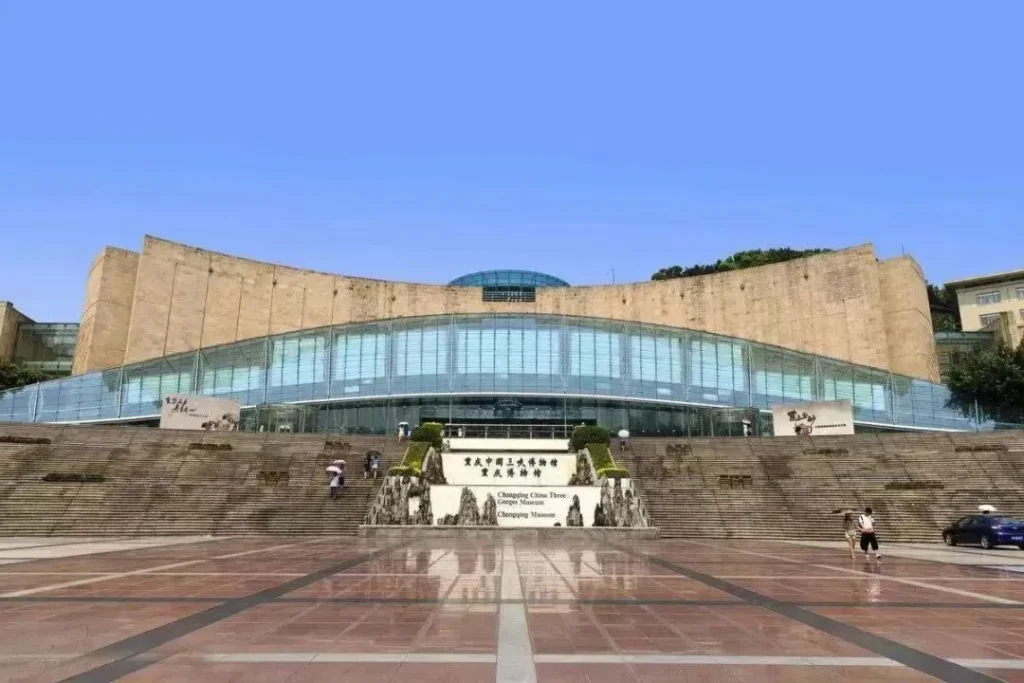
| Address | 236 Renmin Road, Yuzhong District, Chongqing (directly opposite the Chongqing People’s Great Hall) |
| Suggested Duration | 3–4 hours |
| Best Season | Year‑round — it’s entirely indoors |
A quick note on crowds: weekday mornings are the sweet spot. Saturday afternoons, the main halls fill up — still manageable, but you’ll share the Wuyan Han Que with a few dozen selfie‑takers. The 3 Gorges Museum Chongqing stays busy, but it rarely feels overwhelming given the scale of the building. And since entry is free (unlike most attractions in a city where how expensive is Chongqing depends entirely on your choices), you can dip in for an hour or linger all afternoon without budget pressure.

The Story Behind the Museum
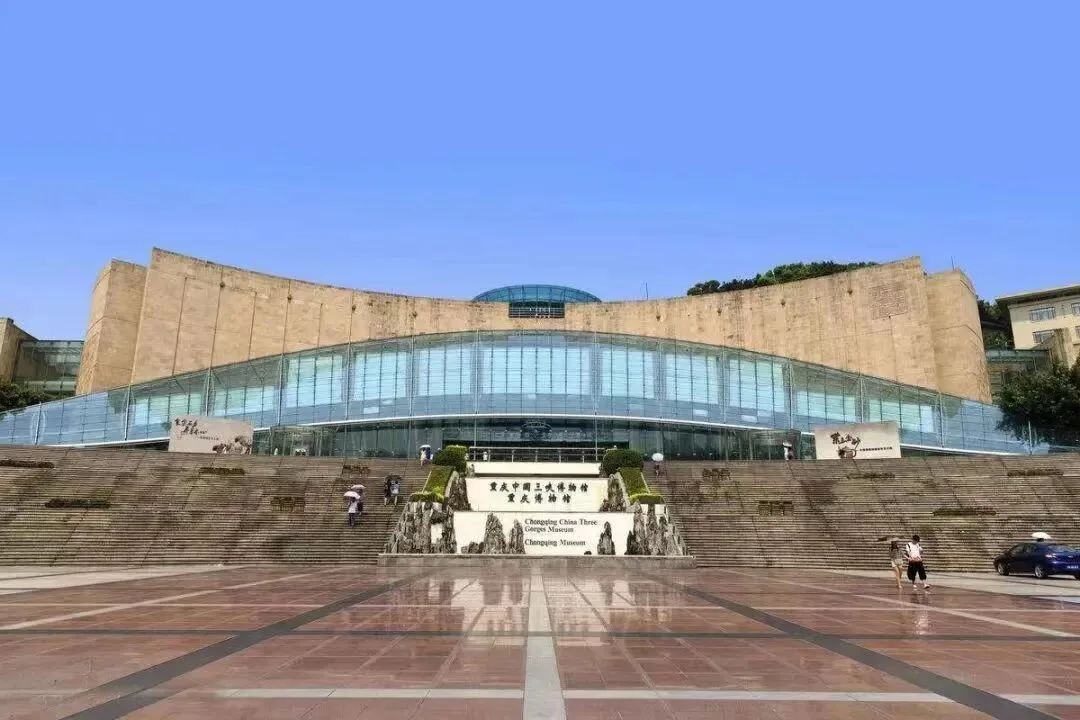
The museum’s full name — Chongqing China Three Gorges Museum — hints at the scale of the story it tells. Its creation is tied to one of the largest engineering projects in human history: the Three Gorges Dam.
In the 1990s, as the Yangtze waters began rising behind the dam, an enormous rescue mission took shape. Thousands of archaeological sites — tombs, temples, cliff carvings, entire village foundations — faced submersion. The government decided in 2000 to build this museum as a permanent home for the artifacts saved from the flood zone. Construction finished in 2005.
The lineage runs deeper. Before it became the Three Gorges Museum in Chongqing, the institution started as the Southwest Museum in 1951, then the Chongqing City Museum in 1955. Over six decades, the collection grew from regional relics into one of China’s most comprehensive historical archives — over 180,000 artifacts spanning 35 categories. Paleolithic fossils. Shang Dynasty bronzes. Han Dynasty tomb figurines. Ming calligraphy scrolls. Each piece a thread in the region’s long, tumultuous story.
The museum complex today includes five venues: the main building on Renmin Road (where you’ll spend most of your time), the Baiheliang Underwater Museum in Fuling, the Soong Ching‑ling Memorial Hall, the Tushan Kiln Site, and the Three Gorges Cultural Relics Protection Base. You only need the main building for a first visit — but knowing the other sites exist gives you a sense of how seriously this region takes its history.

Floor-by-Floor Guide: What to See
Four exhibition floors. Start on the first floor and work your way up — the layout is designed to carry you from ancient geology through to Ming porcelain without backtracking. This floor‑by‑floor walkthrough of the Three Gorges Museum Chongqing follows the route most visitors take, and it works.
1F — The Magnificent Three Gorges
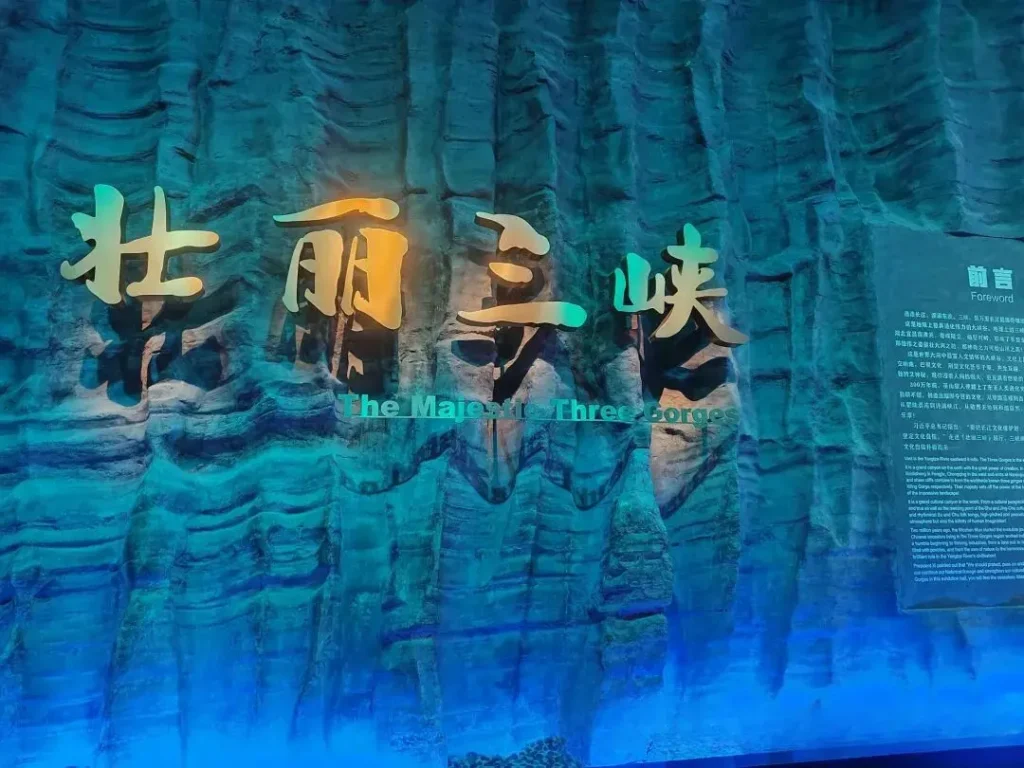
This is the museum’s headline act — and the reason you came. The hall pulls together natural history, cultural relics, and modern technology to tell the full story of the Three Gorges region.
Your first sight: the Wuyang Han Que. Two towering stone gate pillars — 5.4 meters tall, carved with mythical beasts and scenes of daily life — stand at the entrance. They’re the most intact Han Dynasty ornamental gate towers in China. A photo can’t capture the scale. You need to stand beneath them.
Nearby, look for the left jawbone fossil of “Wushan Man” — over 2 million years old, one of the earliest traces of ancient humans in East Asia. Across the hall, the Jingyun Stele records the life of an Eastern Han county magistrate in elegant calligraphy carved into stone.
Don’t skip the 3D simulation zone. With glasses‑free projection, the hall recreates the geological formation of the gorges over hundreds of millions of years. Look up — the ceiling projects the famous “Wushan Clouds and Rain” weather patterns unique to the gorge region. It’s immersive in a way that glass display cases can’t match. Among all the exhibits at the Three Gorges Museum Chongqing, this one stops first‑time visitors in their tracks.
360° Circular‑Screen Movie: The Great Three Gorges
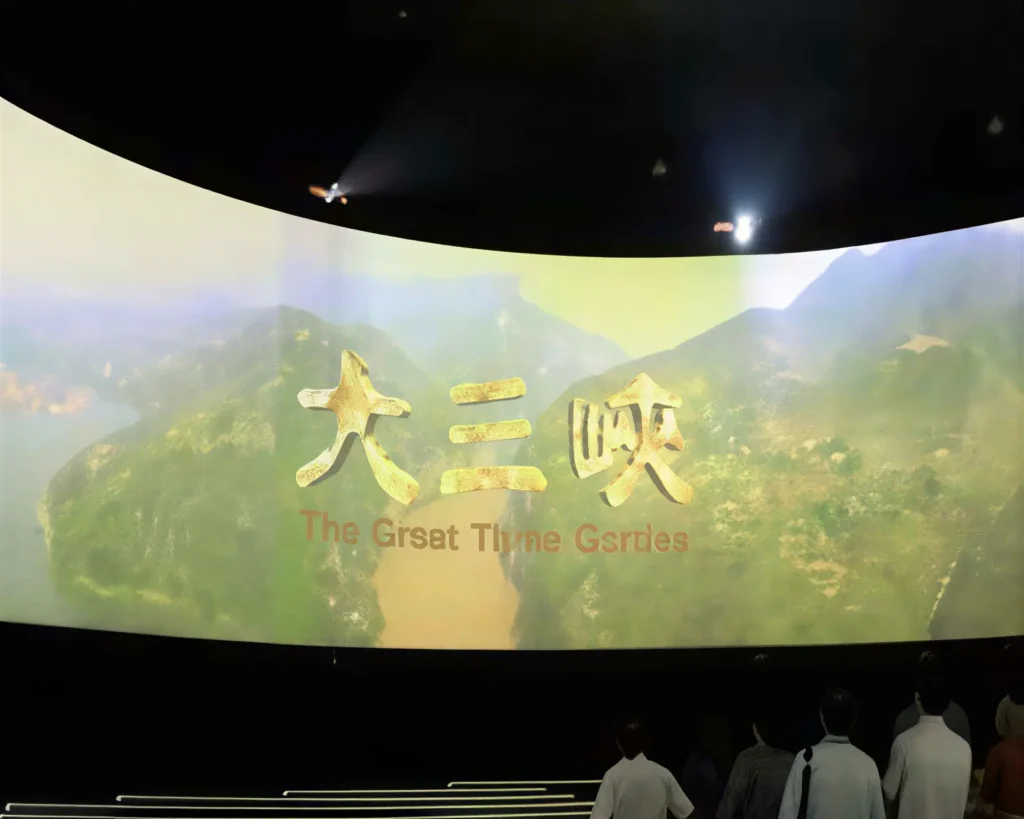
Hidden on the first floor is a circular‑screen cinema most visitors walk right past. Don’t. Produced by CCTV and the Central Newsreel and Documentary Film Studio, the 22‑minute film uses aerial footage to show the Three Gorges as they existed before the reservoir rose — towering cliffs, mist‑wrapped peaks, ancient pathways clinging to the rock face. It’s a permanent memorial to a landscape that no longer exists.
Show times: 11:30, 14:30, 15:30 (confirm at the cinema entrance — schedules occasionally shift for maintenance or group bookings).
Free entry. No English subtitles, but the visuals speak for themselves.
2F — Ancient Ba‑Yu
This floor belongs to the Ba people — a warrior culture that ruled the Chongqing region over 3,000 years ago, long before China unified under the Qin emperor.
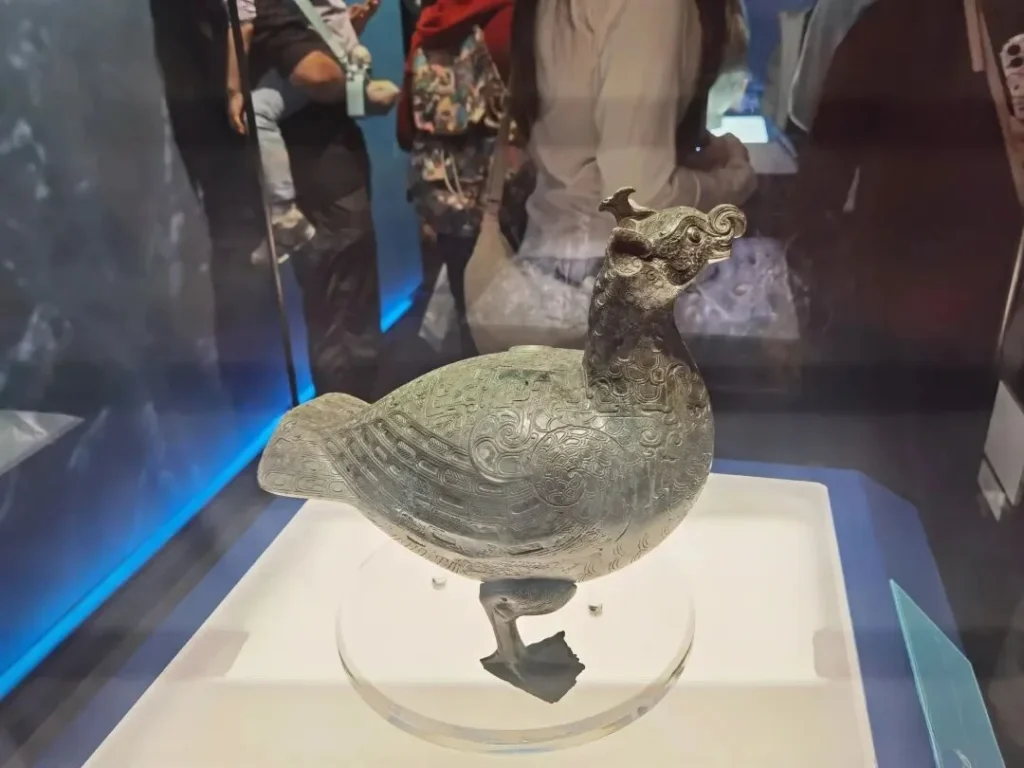
Star artifact: the Bird‑shaped Zun. This bronze ritual vessel (28 cm long, 16.8 cm wide, 29 cm tall) from the Warring States period defies easy description — it merges a fish mouth, eagle beak, phoenix crown, pigeon body, and duck feet into a single creature, all inlaid with turquoise. No opening. Probably used for sacrifices. It’s strange and exquisite at the same time.
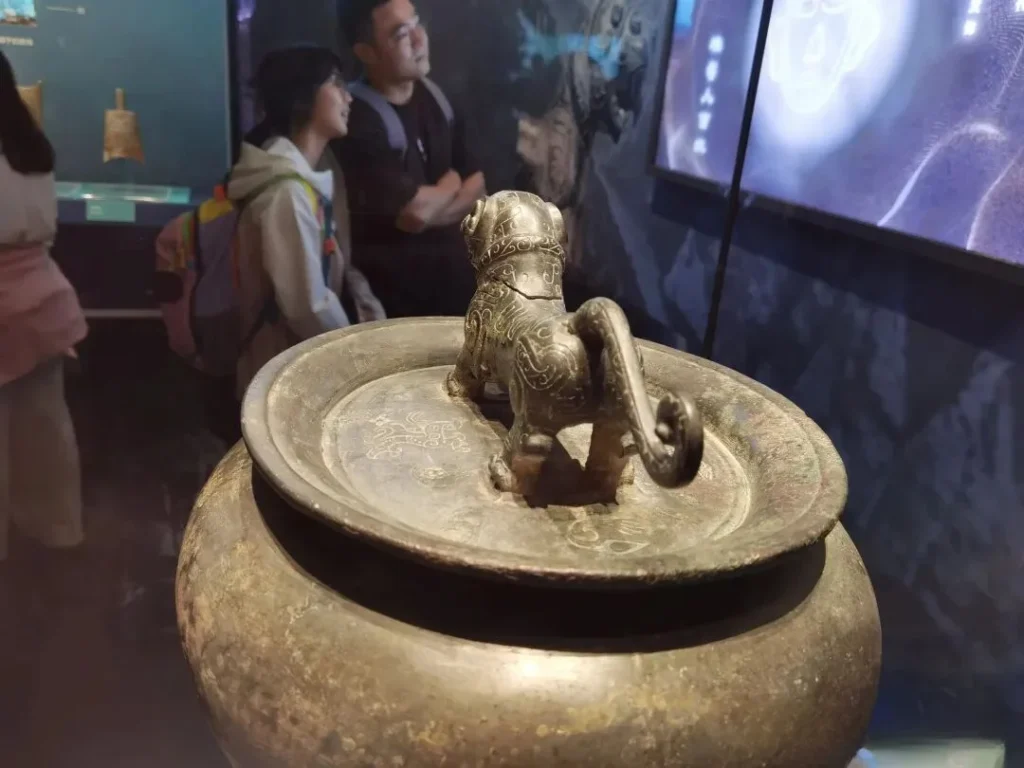
The Tiger Button Chunyu — a bronze percussion instrument topped with a crouching tiger — sits nearby. The Ba people worshipped tigers. This instrument was used in battle to signal troops, and the tiger figure reflects their warrior spirit. Known among Chinese archaeologists as the “King of Chunyu,” it’s one of the defining artifacts of Ba culture. Seeing it up close is one of the reasons the Three Gorges Museum Chongqing earns its reputation as a world‑class institution.
Also on this floor: the Three‑Ram Bronze Zun (42.8 cm tall, Shang Dynasty). Its casting style shows clear influence from the Central Plains — proof that the ancient Ba‑Shu region traded and communicated with the heartland of Chinese civilization over three millennia ago.

3F — War Years & Han Dynasty Art
The mood shifts abruptly on the third floor. One hall plunges you into the 1930s and 1940s, when Chongqing served as China’s wartime capital and endured years of aerial bombardment by Japanese forces. Over 400 photographs and 300 wartime artifacts fill the space — letters from revolutionary martyrs, bomb‑shelter documents, newspaper clippings. A multimedia installation recreates the Chongqing Bombardment with sound and projected imagery. It’s heavy. It’s necessary.
You’ll need a palate cleanser after that. Walk across the hall to the Han Dynasty Sculpture Art section. The energy flips entirely.
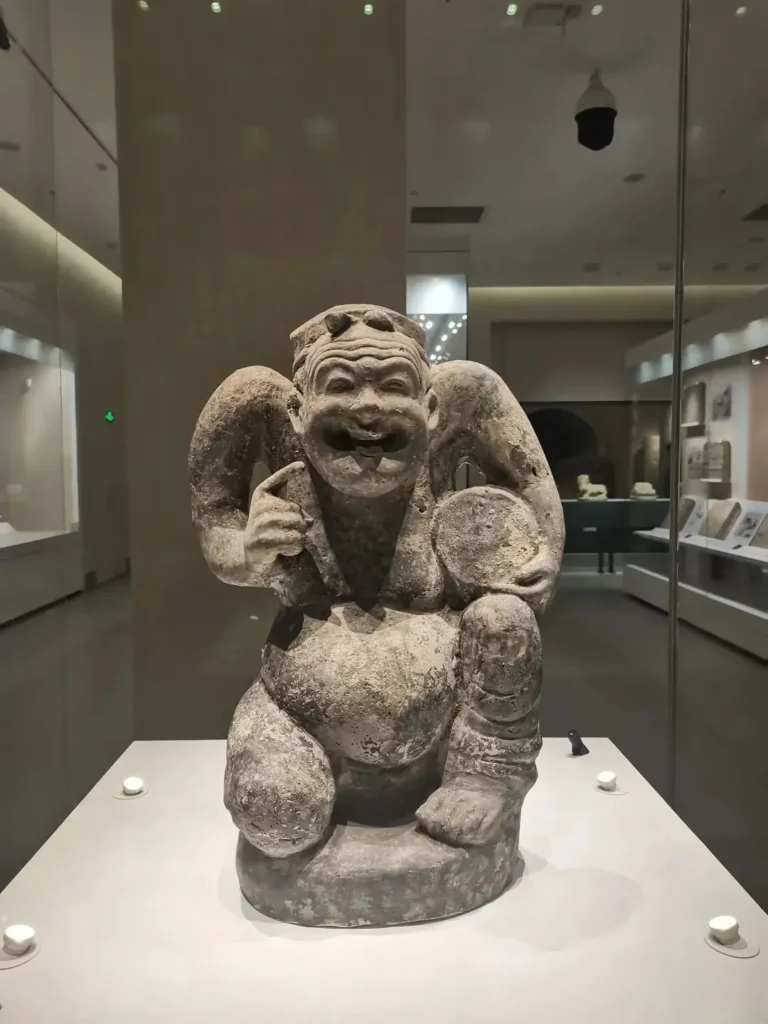
The crowd favorite: a Gray Pottery Storytelling Figurine — a clay entertainer caught mid‑performance, mouth open, arms waving, face locked in an exaggerated grin. This “rapper” from 2,000 years ago radiates joy. He’s surrounded by smiling musicians, playful ceramic dogs, and clay chickens — a reminder that the Han Dynasty, for all its imperial grandeur, was also a time when people laughed hard and lived loud.
The Southwest Ethnic Folk Customs section rounds out the floor, displaying clothing, tools, and architectural models from over 30 ethnic groups across Chongqing, Sichuan, Yunnan, and Guizhou. The Dong people’s drum towers and Tujia stilted houses are particularly striking.
4F — Paintings, Calligraphy & Porcelain
The top floor is quieter. Fewer visitors make it this far — their loss.
The calligraphy and painting hall rotates its collection, but if you’re lucky, you’ll catch the Ming Dynasty master Tang Yin’s (Tang Bohu) handscroll copy of Han Xizai’s Night Banquet. The original painting, from the Five Dynasties period, depicts a lavish nighttime party — musicians, dancers, guests reclining on silk cushions — and Tang Yin’s reproduction captures every decadent detail. Spend five minutes tracing the figures with your eyes. There’s a story in every corner of the scroll.
In the ceramics hall, look for the White Porcelain Guanyin by Ming Dynasty master He Chaozong. The glaze is flawless — a warm, milky white that seems to glow from within. Nearby, peachbloom‑glaze bowls and celadon vases from the Song through Qing dynasties fill the cases. Quiet, elegant, and a perfect way to wind down before heading back into the city’s noisy streets. The upper‑floor galleries of the Three Gorges Museum Chongqing reward those who take their time.

Suggested Routes
Not everyone has four hours. Pick your path through the Three Gorges Museum Chongqing.
Highlights Route (2 hours)
1F: Wuyang Han Que, Wushan Man fossil, quick walk‑through of the 3D simulation → 2F: Bird‑shaped Zun and Tiger Button Chunyu (skip the rest) → 3F: Storytelling Figurine, 10 minutes in the wartime hall → 4F: peek at Tang Yin’s scroll if it’s on display. You’ll miss the circular‑screen movie and the porcelain hall — but you’ll hit the five things that make this museum special.
Full Experience Route (3–4 hours)
1F: Full tour including the 22‑minute circular‑screen movie → 2F: All three bronze highlights + the three‑horned zun → 3F: Wartime hall (don’t rush it), Han sculpture, ethnic customs → 4F: Calligraphy, paintings, and porcelain at a relaxed pace. This is the route I’d take if it were my first visit.
Family Route (1.5–2 hours)
1F: 3D simulation zone and circular‑screen movie (kids love both) → 2F: Bird‑shaped Zun (the strange hybrid creature sparks questions) → 3F: Storytelling Figurine and the Han Dynasty clay animals → back to 1F for the interactive Tourist Practice Center where kids can try simulated archaeological digs.
Interactive Experiences & Facilities
The Three Gorges Museum Chongqing rewards hands‑on exploration. Here’s what’s available beyond the glass cases.
Free volunteer guided tours. Knowledgeable volunteers lead Chinese‑language tours at set times daily. Check the schedule on the official WeChat account (“重庆中国三峡博物馆”). English guided tours are available for three halls — Magnificent Three Gorges, Ancient Ba‑Yu, and Chongqing: Journey to Urbanization. Find the tour desk at the reception center on the first floor. Fee: ¥150 (about USD 21) for a 1‑hour tour in English.
Audio guide rental. ¥20 (about USD 3) per device, with a ¥100 (about USD 14) refundable deposit. Available in Chinese, English, Russian, French, Japanese, and Korean. Covers seven exhibition halls. Pick up at the first‑floor reception center — bring your passport for the deposit.
Tourist Practice Center. Tucked away on an upper floor, this hands‑on space lets visitors try simulated archaeological digs (great for teenagers), learn to mount a traditional Chinese painting, or duplicate porcelain pieces under staff guidance. It’s designed to make history tangible — and it works.
Stamp collecting. Each floor has a free stamp station near the entrance. Bring a small notebook — each floor has a different stamp design featuring famous artifacts from the collection. A satisfying, zero‑cost souvenir.
Free Wi‑Fi. Available throughout the museum. Connection is generally stable.
Luggage storage. Free lockers and a staffed left‑luggage counter at the main entrance. Large bags must be stored before entering the galleries.

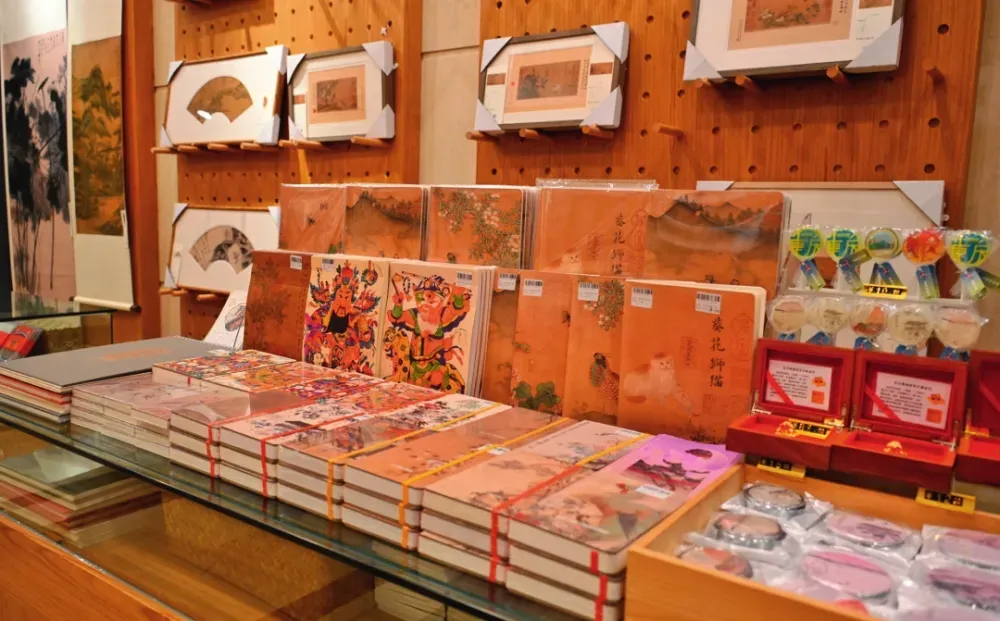
The museum shop on each floor sells creative souvenirs — artifact‑themed refrigerator magnets, ceramic teacups with Ba‑Yu patterns, and notebooks with bronze‑ware motifs. Prices are reasonable (most items ¥20–80, roughly USD 3–12).
Getting There
The 3 Gorges Museum Chongqing sits in Yuzhong District — the city’s old core. Getting there is straightforward, and once you’re oriented (our Chongqing metro map makes it even easier), the journey is painless.
By Metro (easiest): Take Line 2 or Line 10 to Zengjiayan Station. Use Exit 3. Walk north along Renmin Road for about 5 minutes — you’ll see the Chongqing People’s Great Hall on your right first, then the museum directly across the square. Line 10 also stops at Dalidang Station (Exit 1), about a 10‑minute walk from the museum.
From Chongqing Jiangbei International Airport (CKG): About 25 km (15.5 miles) away. Take Metro Line 3 from the airport to Niujiaotuo Station, transfer to Line 2, get off at Zengjiayan. Total journey: roughly 1.5 hours. A taxi or Didi takes about 1 hour and costs approximately ¥80–120 (USD 12–17), depending on traffic.
From Chongqing Railway Station: Just 1.3 km away. A taxi costs about ¥10 (USD 1.50) and takes 5–10 minutes.
By Bus: Routes 132, 145, 152, 181, 215, 261, 262, 265, 421, 829, 862, 881 — alight at Xuetianwan Station or Great Hall Station.
Nearby Attractions
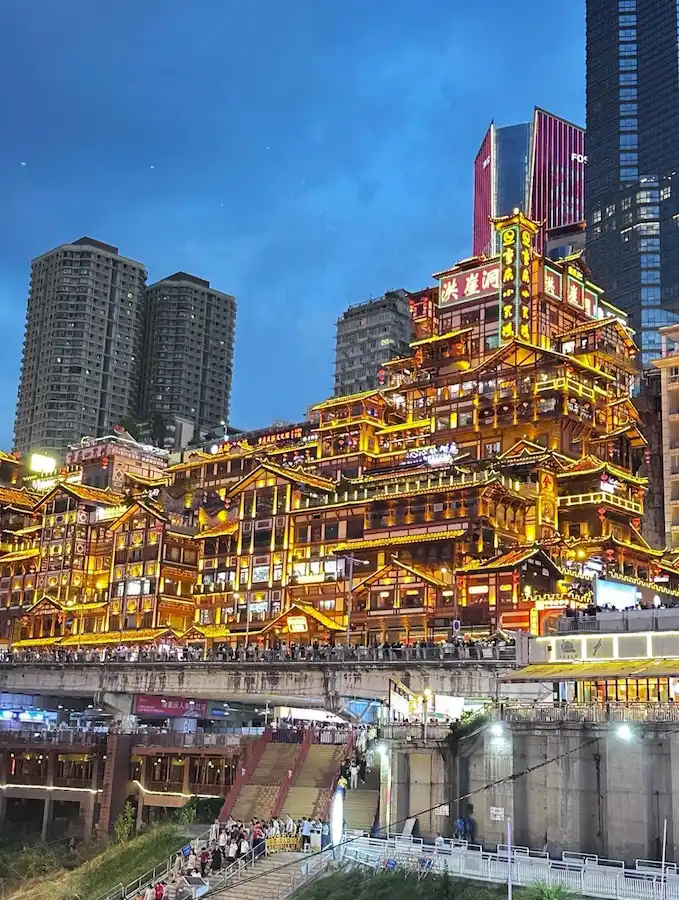
The museum anchors a walkable cluster of sights. You can fill an entire day without taking another metro ride. After your visit, consider extending your exploration to Hongya Cave Chongqing — the iconic stilt‑house complex is a 15‑minute taxi ride away and looks spectacular at night.
Chongqing People’s Great Hall. Right across the square. Built in the 1950s, it blends traditional Chinese palace architecture with southern regional styles — a gigantic green‑glazed dome, scarlet columns, elaborate carved pillars. Entry costs ¥8 (about USD 1.20). Even if you skip the interior, the exterior makes a striking photo — especially framed against the museum’s modern façade from the middle of Renmin Square.

Zhongshan Fourth Road. A 10‑minute walk from the museum. This tree‑lined street — often called “Chongqing’s Most Beautiful Street” — is lined with Republican‑era buildings, including Guiyuan (where the Double Tenth Agreement was signed in 1945) and Zhougong Mansion, the Communist Party’s Southern Bureau headquarters during the war. Cafés and small restaurants dot the street — perfect for a post‑museum lunch.
Zengjiayan Cliffside Path. This riverside walkway follows the Jialing River and offers a classic Chongqing perspective: the light rail passing overhead, the river below, and the city’s layered architecture stacked up the hillside.
Liziba Light Rail Station. One metro stop from Zengjiayan on Line 2. This is the famous station where the train passes directly through a residential building — a surreal, only‑in‑Chongqing photo opportunity.
Where to Eat Nearby
Food and unsealed drinks aren’t allowed inside the galleries, but the surrounding streets have you covered.
Renmin Square area. Small noodle shops and snack stalls cluster around the square. Grab a bowl of Chongqing xiaomian (spicy noodles, about ¥10–15 / USD 1.50–2) or suanlafen (hot‑and‑sour sweet potato noodles). Quick, cheap, and exactly what locals eat.
Zhongshan Fourth Road. Quieter and more polished — cafés with outdoor seating, restaurants serving Sichuan classics in renovated Republican‑era buildings. A good choice if you want to sit down and rest your feet.
Daxigou and Shangqingsi neighborhoods. Walk 10–15 minutes northeast from the museum into these residential areas. You’ll find hot pot restaurants packed with locals, the broth a deep, numbing red — the real deal Chongqing hot pot experience. No English menus. No tourist markup. If you’ve just spent three hours looking at ancient bronzes, this is the right way to end the day.
Visitor Tips
- Photography: Allowed in most halls for personal use. No flash. No tripods. No selfie sticks. Some special exhibitions post no‑photo signs — respect them.
- Accessibility: Elevators on every floor. The museum is wheelchair‑friendly throughout. Assistance available upon request at the service desk.
- Best time to visit: Weekday mornings, right when doors open at 9:00 AM. You’ll have the 1F hall nearly to yourself for the first hour. Saturday afternoons are the busiest.
- Dress comfortably. Four floors of exhibition space means a lot of walking. Comfortable shoes matter more than you’d think.
- Bring your ID. Passport for international visitors, Chinese ID card for domestic visitors. You’ll need it at the entrance.
- Water fountains on every floor. Bring a reusable bottle.
- Closed Mondays. Plan around it. The one exception: if Monday falls on a Chinese public holiday, the museum opens and closes the following weekday instead.
If you’re staying overnight nearby, our guide to Chongqing hotels covers the best areas to book — the Yuzhong District neighborhoods of Shangqingsi and Daxigou put you within walking distance of the museum.
Frequently Asked Questions
Is the Three Gorges Museum worth going?
Absolutely. It’s free, centrally located, and covers 3,000 years of regional history in one building. For a first‑time visitor to Chongqing, the Three Gorges Museum Chongqing provides the context that makes everything else — the skyline, the hot pot, the old streets — feel richer and more meaningful.
How do I get to the 3 Gorges Museum Chongqing?
Metro Line 2 or Line 10 to Zengjiayan Station, Exit 3. Walk 5 minutes north along Renmin Road. The 3 Gorges Museum Chongqing is directly opposite the Chongqing People’s Great Hall — you can’t miss the large square and the grand domed building.
Do I need to make a reservation?
No. The museum no longer requires advance booking for general visits. Bring your passport and scan at the entrance. During major national holidays (National Day in October, Spring Festival in January/February), temporary crowd‑control measures may apply — check the official WeChat account before visiting during peak periods.
Can I take photos inside the museum?
Yes, for personal use. No flash photography, no tripods, and no selfie sticks. Some temporary exhibitions may restrict photography — look for posted signs.
How long does it take to go through the museum?
Most visitors spend 3–4 hours at the Three Gorges Museum Chongqing. If you’re short on time, focus on Floors 1 and 2 for a solid 2‑hour visit. Add the circular‑screen movie if your timing aligns with the show schedule.
Is the museum suitable for children?
Yes. The 3D simulation on the first floor, the circular‑screen movie, the Han Dynasty clay animals on the third floor, and the hands‑on Tourist Practice Center all engage younger visitors. Strollers are welcome and elevators serve every floor.
Do I need to speak Chinese to enjoy the museum?
Some exhibit labels include English translations, but coverage varies by hall. The audio guide (¥20, about USD 3) offers English narration for seven exhibition halls. The key artifacts highlighted in this guide all have English labels — so you can follow this floor‑by‑floor route through the Three Gorges Museum Chongqing without missing the essentials.
Where is the Three Gorges Dragon Spine located?
The “Dragon Spine” refers to a geological formation in the Three Gorges region, not an object inside the museum. The first‑floor “Magnificent Three Gorges” hall covers the region’s geology in detail — the 3D simulation and the exhibits on gorge formation are your best bet for understanding the landscape that created the Dragon Spine.
You come for the artifacts and stay for the stories. When you walk out of the 3 Gorges Museum Chongqing and back onto Renmin Road — the Great Hall glinting across the square, the smell of chili oil drifting from a noodle shop somewhere nearby — you’ll feel the connection. Everything outside suddenly has a name, a date, a reason for being. Step into the city. It’s waiting.
Ke Ping — Founder, Chongqing Travels
Certified China Travel Specialist · Certificate details
This guide can become your real trip
Instead of figuring out the mountain city's vertical maze alone, let me and our team build your perfect Chongqing trip — from Hongyadong's neon lights to the best late-night hot pot.
📋 Plan My Chongqing Trip